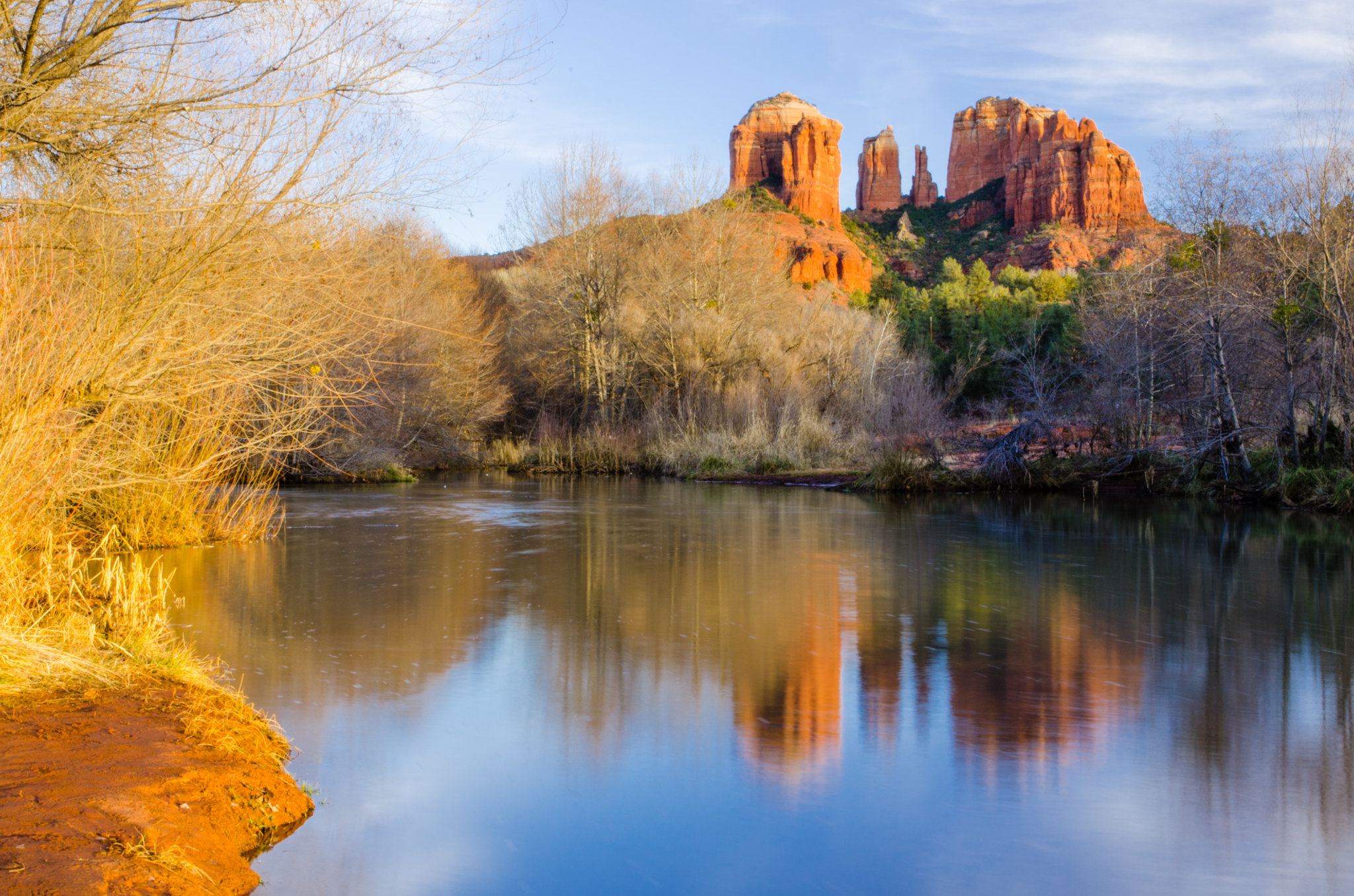
Tag: hiking index

  • Katmai

    Katmai

    Seattle  |  The Grand Princess  |  Katmai  |  Kenai Peninsula  |  Wrangell-St. Elias  |  The Interior  |  Denali  |  Anchorage and Home

    Saturday: Whittier to Brooks Camp

    We disembark onto a private bus. There are a few others with us. Making our way through the Anton Anderson Memorial Tunnel, we soon arrive at the Anchorage airport.

    I check the car seats and bags for city travel at the storage facility, then board our flight to King Salmon.

    There is no reception in King Salmon, but I was able to find the number for the Katmai Water Taxi and call them using a wall phone that allows free local calls. We wait in the adjacent visitor center where we watch a film about the Katmai area.

    The shuttle bus arrives and takes us to the edge of Naknek Lake. Getting off the bus, we are greeted by a swarm of bugs.

    “Are those mosquitoes?”

    “No, they are white socks.”

    I think to myself, “Oh good, they aren’t mosquitoes.” It turns out that the white socks are far worse, first numbing the skin, then biting off a chunk of flesh, leaving drops of blood oozing out of the small hole.

    The water taxi takes us across the vast lake and drops us off by the Brooks Camp ranger station. We watch a bear safety video and receive training from the ranger. Then, we backpack into camp, set up, and head to a buffet dinner at Brooks Lodge.

    After dinner, we are treated to amazing bear sightings along the elevated platform near camp. We shower before turning in at camp.

    Sunday: Valley of Ten Thousand Smokes and Brooks Falls

    We enjoy a breakfast buffet at Brooks Lodge and join the tour to the Valley of Ten Thousand Smokes. The ranger recounts the eruption of Novarupta and explains how the landscape was shaped. We stop by the Kettle Ponds Overlook before arriving at the final destination.

    The tour operator provides us with roasted vegetable sandwiches at the visitor center. After that, we join the group on a four-mile hike down to the valley floor to see how the Ukak River carved slots in the volcanic ash. The kids are exhausted.

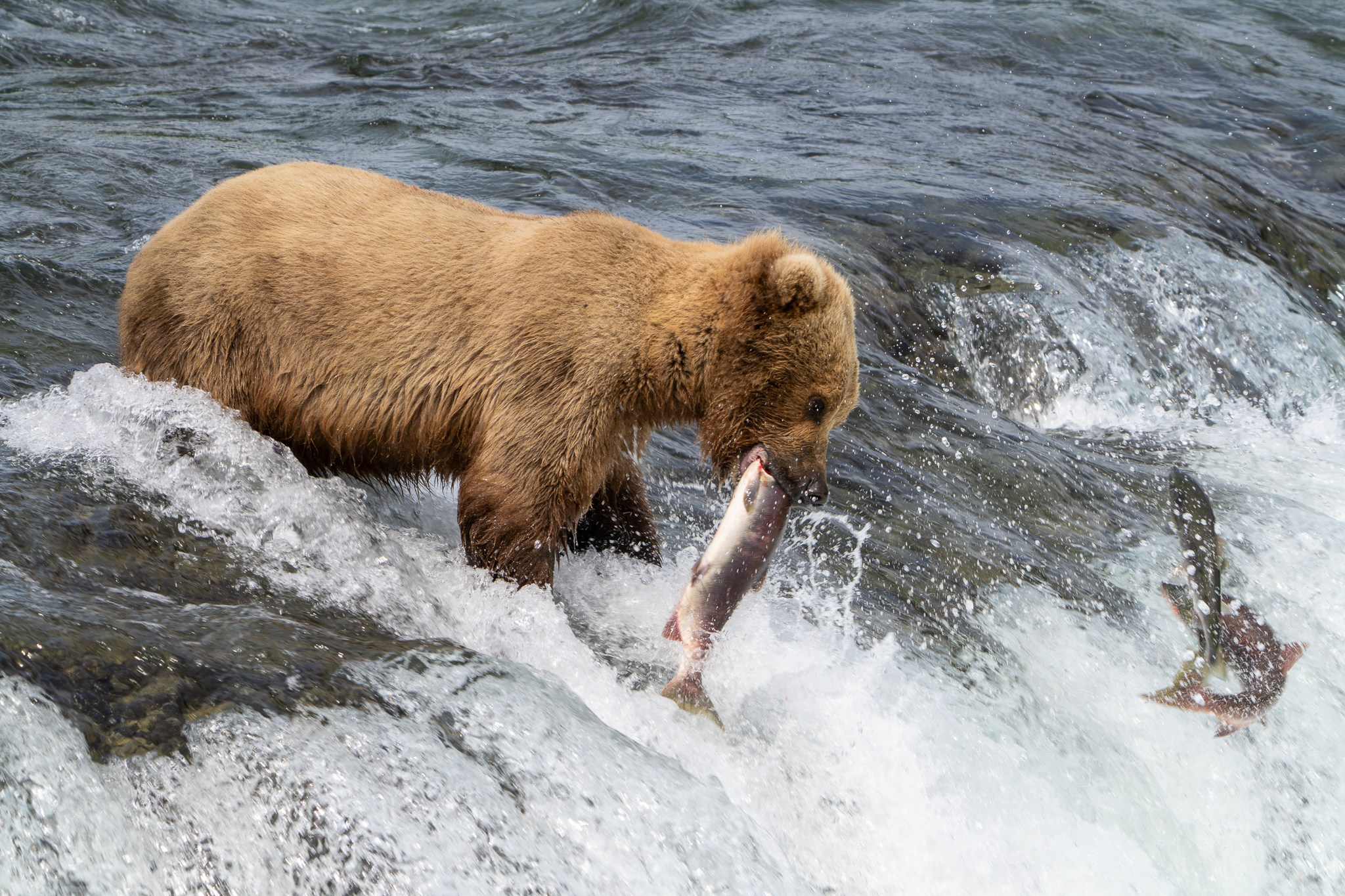
    Back on the bus, we ask to get dropped off at the trail to Brooks Falls. We hike to the falls to see bears feasting on salmon. Back in Skagway, we were told that the salmon were late this year, only returning a few days ago, and that we timed it perfectly. We are mesmerized by the rhythm of fish leaping upstream.

    The bears, we observe, only eat the heads, belly, and skin of the fish. The rest, they throw to the gulls to clean up.

    We hike back to camp along the road, make our way back to Brooks Lodge for dinner. Then, we hike to our campsite to gather fresh clothes for the shower after a long day. After the shower, Jayden, while acting silly, falls into the puddle next to the urinal and needs to shower again.

  • Twenty Lakes Basin

    Twenty Lakes Basin

    Having successfully camped for two nights and hiked at high altitude, we figured it was safe to go backpacking. This will be Daphney’s first trip into the backcountry wilderness.

    We spend the first night at Gray’s Meadow to acclimatize. Situated just below Kearsarge Pass, the campground gives us perfect night sky to view the Perseid meteor shower. I wake up just after midnight. Yan barely arouses. I try again at 4:30, and this time, through the top of our mesh tent, we lose count of how many fireballs pass across the starlit sky.

    The next morning, we head out from the Saddlebag Lake boat launch and dam. On the other side of the lake on a grassy knoll, baby Audrey and baby Daphney get to know each other better. Beyond, we circle around the wrong side of Greenstone Lake but eventually make it to the highest valley; this is part of Twenty Lakes Basin.

    The group decides to set camp by Mill Lake. This picturesque lake is overshadowed by North Peak. We set up and wash. Daphney gets a chilly dip into the small waterfall from Cascade Lake. She’s not happy, but I warm her up and put on fresh clothes. Yan and I get ourselves warm with egg drop soup, rice, and red curry.

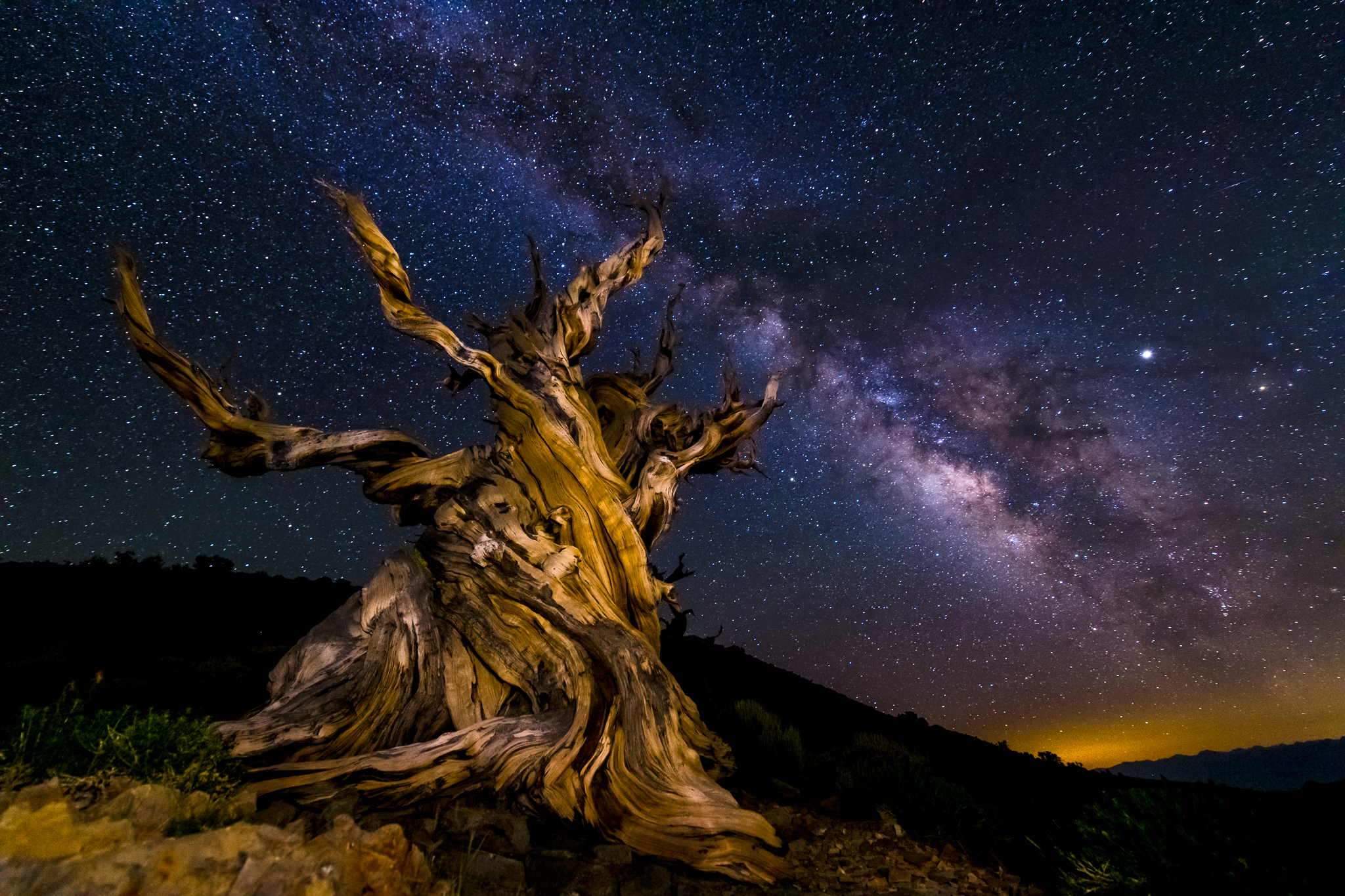
    As night falls, we turn in. The baby is fussy, and I’m worried again. Soon, though, Yan is able to console her to sleep. I’m outside orchestrating a tent lighting experiment. Some people’s lights are brighter than others’, so I have to call out when to shut off each one. After several tries, the lighting turns out evenly. My favorite shot from this trip would turn out to be the star trails over our lit tents.

    The first rays of sun first fire up North Peak. Soon, the pools of water turn aglow with orange reflection as the valley comes to life. Daphney did fine, and she seems happy this morning. Yan and I have some hot drinks with oatmeal.

    The hike out seems longer. Maybe it’s because the baby feels heavier as the trail wears on. We get to take a nice long break at Shamrock Lake—this turns out to be one of my favorite spots.

    Before long, we’re back at the trailhead. A little hike along pavement brings us back to our cars. Daphney is still smiling, having gone on her first backpacking trip without ever wearing a backpack.

  • Big Pine Creek, Rock Creek, Heart Lake
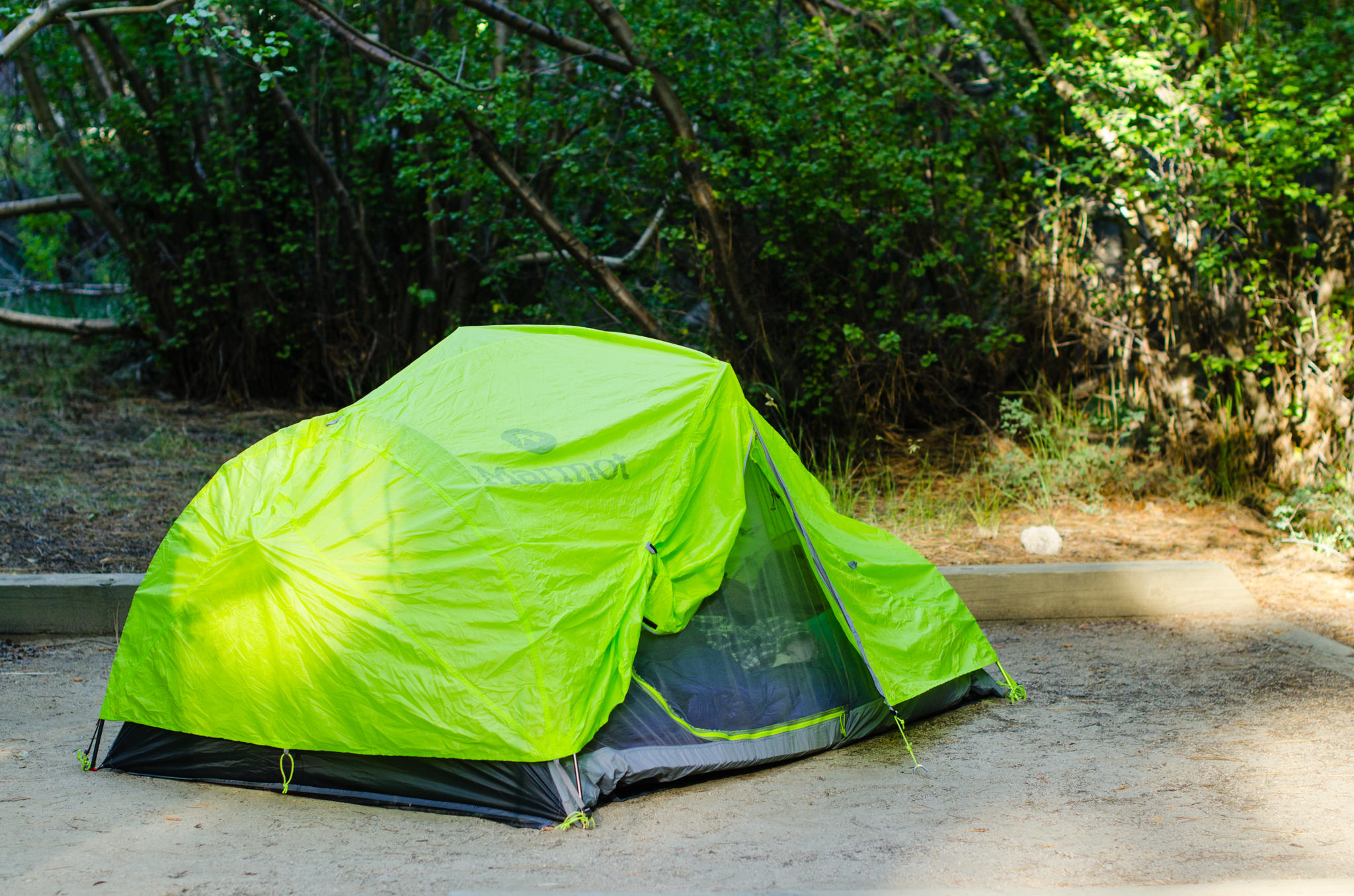
    Big Pine Creek, Rock Creek, Heart Lake

    It’s going to be Daphney’s first camping trip. I’m a little nervous about the altitude. Days before, I had been researching high altitude problems in babies. I had read that staying below 2500 m (8200 ft) is safe, but approach 3000 m (9840 ft) carefully. Since we’re staying at Big Pine Creek (7600 ft) the first night, I feel better.

    We arrive just after sunset, but our site is still visible. Yan quickly nurses Daphney while I set up the tent. Then, we arrange our pads with a slight gap between and our sleeping bags on top, zipped together. We experiment a little. The baby’s changing pad goes in the middle, right between our pads. This ends up being the perfect arrangement.

    Daphney is happy! The first night had turns out to be a success. She slept through most of the night, and now, I can tell that she loves being outdoors.

    To acclimatize, we stay relatively high, visiting Rock Creek Lake and Crowley Lake. Deciding to visit Mono Lake for sunset, we stop just beyond Mammoth to have noodles for dinner. Even though she likes being outside, the wind really bothers her at while we visit the Mono tufas.

    East Fork Rock Creek is situated at nearly 9000 ft. We are venturing into high country. Again, I’m worried, but everything turns out well. At road’s end, we hike from Mosquito Flats (10000 ft) into lovely Little Lakes Basin to arrive at Heart Lake.

    Now, we have confidence in taking Daphney high alpine adventures.

  • Seattle, Mt. Rainier, and the Olympic Mountains
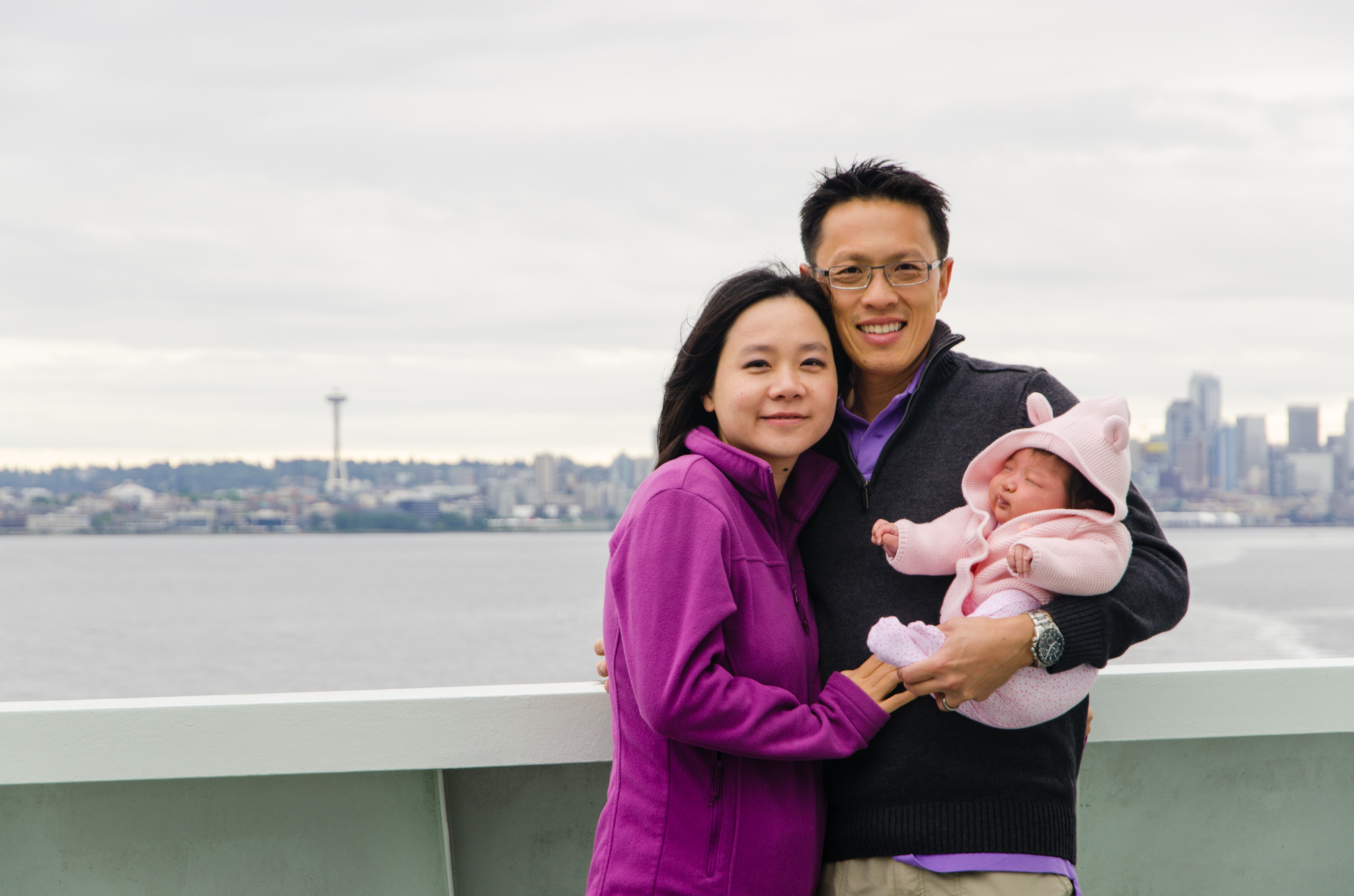
    Seattle, Mt. Rainier, and the Olympic Mountains

    We’re heading to Seattle for me meeting at the American Orthopaedic Association. This first flight for Daphney goes well, and she isn’t the least bit bothered by the cabin pressure changes.

    Aside from the meetings, Seattle brings us great opportunities for sightseeing. Daphney gets her first rental car ride. She visits the original Starbucks. We have breakfast at Lowell’s and do more touristy things. We bring her to the Space Needle and nearby Chihuly Garden and Glass. The after dinner hike up to Kerry Park gives us that expansive view of Seattle’s skyline.

    Then, we visit nearby national parks: Mt. Rainier and the Olympic Mountains. Our trip to Mt. Rainier National Park marks Daphney’s second month. Then, taking the ferry to Bainbridge Island, we tour the northern part of the Olympic Peninsula. We enjoy lunch at the Oak Table Café in Sequim, catch up with friends, and tour lavender fields. Then, we journey to Hurricane Ridge, where I run into a former resident, Chad Harbour, and his family. Lake Crescent Lodge has the most beautiful dining views. At the end of the day, we take the short hike to Sol Duc Falls, where triple waterfalls cascade over rock outcroppings.

    We wake up on our last morning to the view of a lovely sunrise over a calm sound, silhouetted by Mt. Baker in the far distance.

  • San Jacinto Desert View Trail

    San Jacinto Desert View Trail

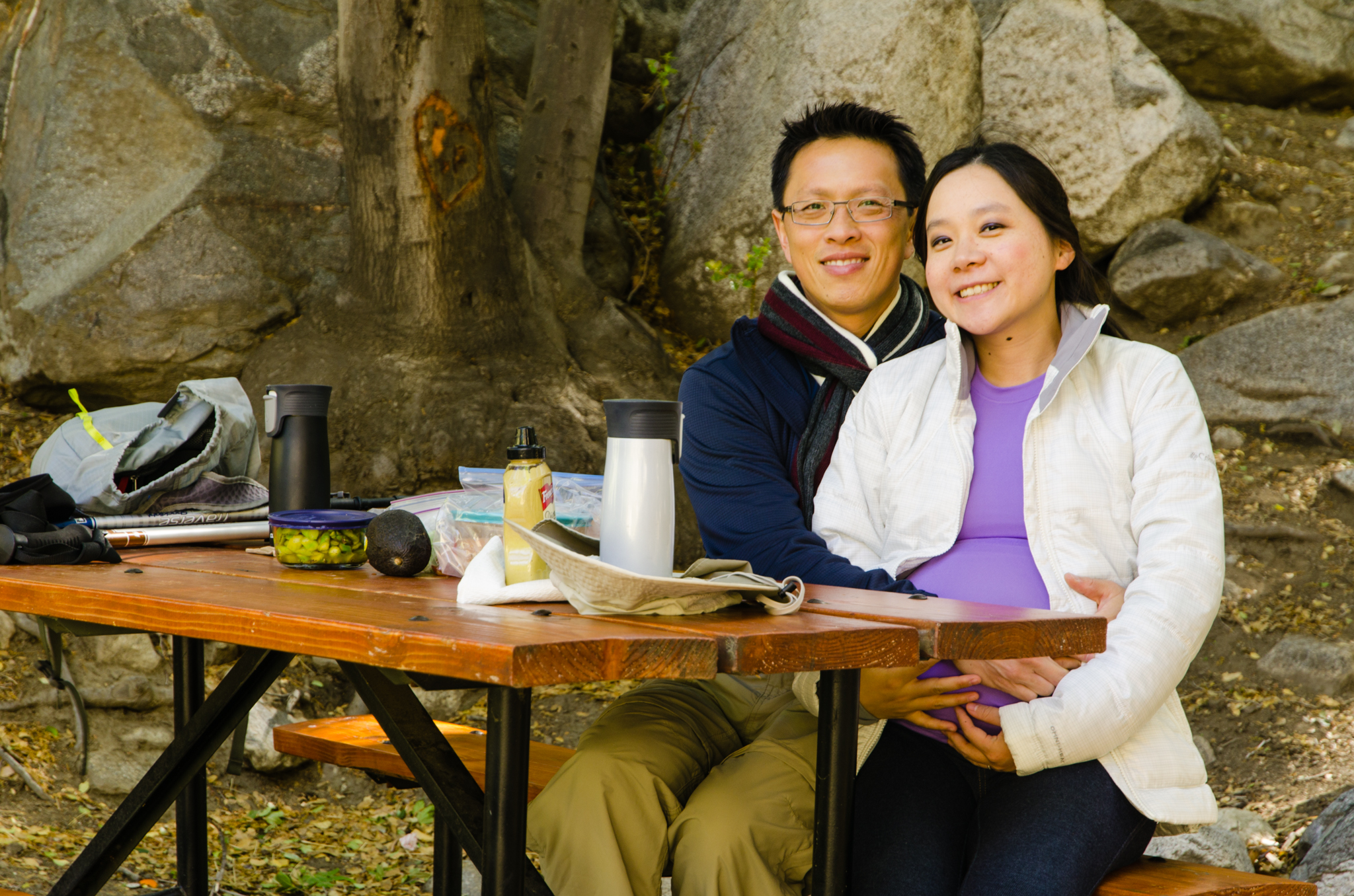
    Yan and I have been enjoying taking pregnancy pictures, and with our love for the outdoors, San Jacinto seemed fitting. We drive out to Palm Springs, get tramway tickets, and have lunch there while waiting for our turn. This time, it’s homemade flatbread with vegetables.

    Once at the top, we have little time to do the Desert View Trail. We find a nice spot to warm up some smoked gouda roasted red pepper soup to savor the moment.

  • Etiwanda Falls

    Etiwanda Falls

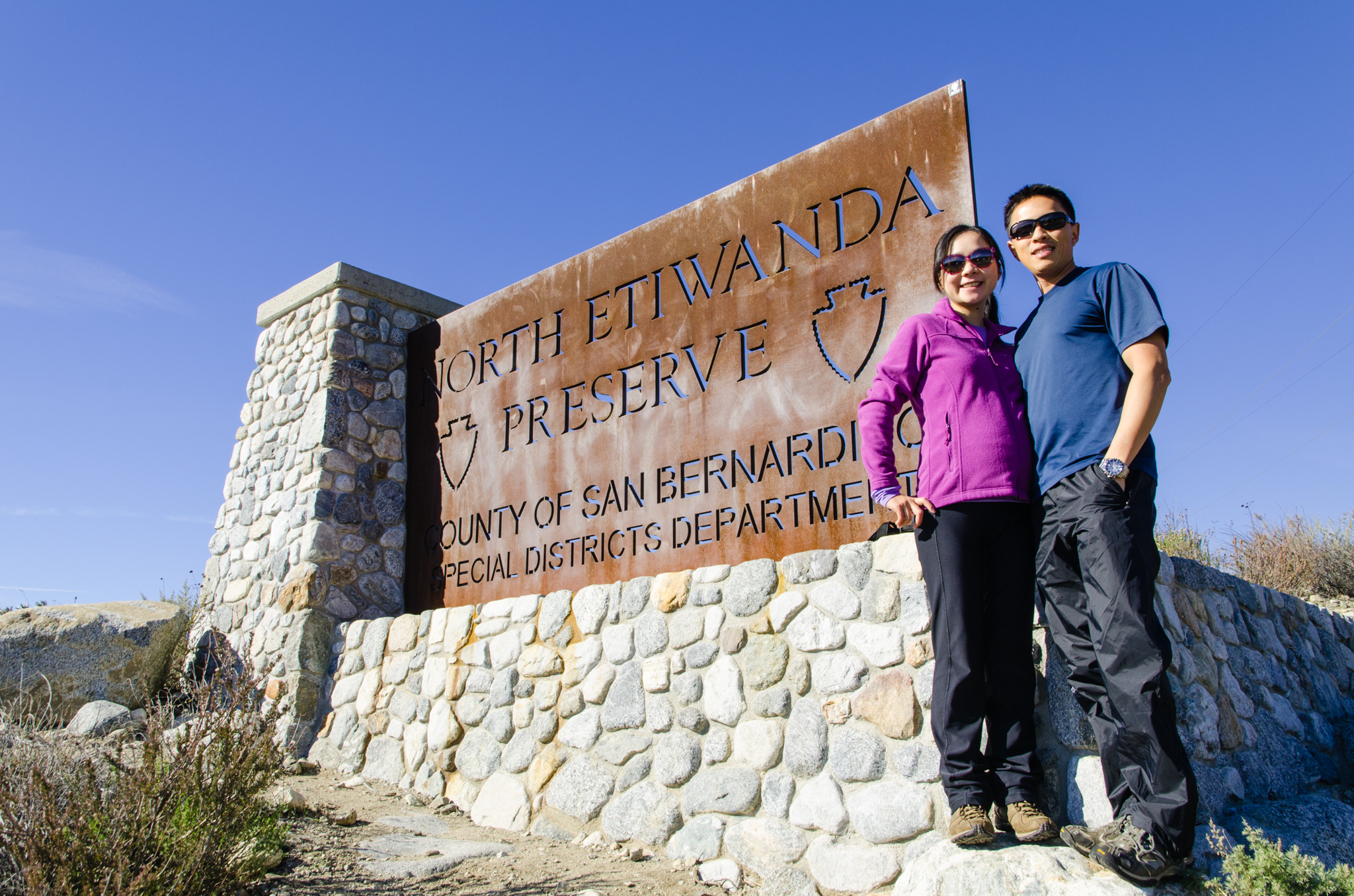
    It’s New Year’s Day, and we want to start off the year by being active. We decide to do this popular hike to Etiwanda Falls. From the reviews, this trail has great ratings.

    We arrive at the trailhead parking early, and parking lot nearly full. We park, pack up, and start the hike. This trail is more exposed than we thought, as we are used to hiking in many forested trails in the San Bernardino Forest. This one is lined only with scrub brush. It’s hot, and finally, toward the end of the trail, we duck beneath some trees and hop around braids of the river. As it turned out, this trail was more about the destination than the journey, as the destination brought us the relief: shade and cool streams.

  • North Cascades

    North Cascades

    It’s early Sabbath morning, and I take off early for the mountains. The destination will be the North Cascades. The day before, I had researched the area, and it looks like one of the most accessible trails with the best views is the Hannegan Pass trail. So, this is the one I chose.

    Driving up from Seattle takes a few hours. I get the parking permit from the ranger station, and from there, I drive further up into the mountains and down a dirt road flanking the Nooksack River’s North Fork. The trailhead is full, and I park a quarter-mile down the road.

    The climb up the trail is scenic, where there are areas of fall color painting the Nooksack Range. It takes me longer than I think to actually reach the Pass. From there, I turn right and head up the knob called Hannegan Peak. The views from here are truly spectacular. Mt. Baker rises to the south. Many hikers linger here and take in the views.

    Then, I head back down the trail, wash up at a trailside waterfall, and continue to the car. My shirt is dry by the time I reach the parking lot.

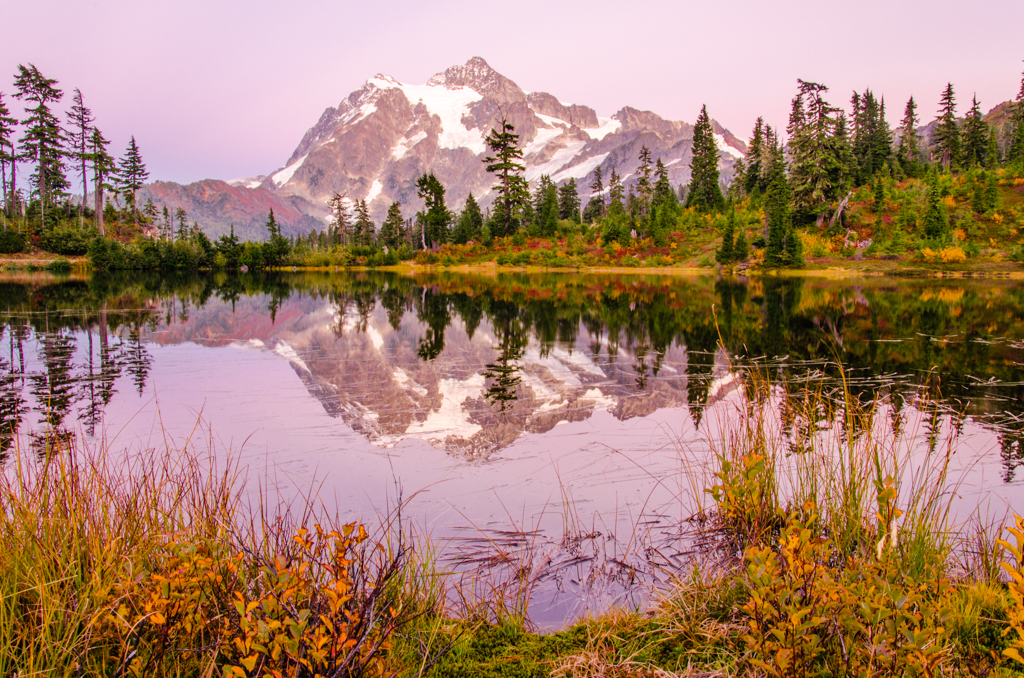
    Further up the road, there’s a beautiful area called Heather Meadows. Scenic highlights include Picture Lake and Artist Point. I visit both. Then, I wait for the sun to set and cast alpenglow on Mt. Shuksan.

  • Glacier, Gable Pass

    Glacier, Gable Pass

    Getting Ready | Over Gable Pass | Into Belly River Basin | Over Redgap Pass | To Many Glacier

    Into the Woods. That’s what this first stretch of trail reminds me of, and it reminds Yan of that same movie we watched in the plane while on our honeymoon. Lee Ridge Trailhead begins as a small inconspicuous orange flag trail marker a half mile south of Canada. I would have missed it had it not for Ms. Ranger’s directions. Stepping off Chief Mountain Highway through the border of brush alongside the road, the trail emerges. Little did we know that this trail would transport us to a trip that will challenge our gear and push their limits.

    We start at 1:05 and figure we would hike about two miles before stopping for lunch. It’s a late start, because setting up for this trip had taken more time than expected. We had to drop one car off at Many Glacier, in the Apikuni Falls parking lot, and transferred all the gear into the other car, all this under piercing rain. We laugh at the rain, though, because it’s dry here on this side of the ridge and because we have come prepared.

    Although the name of this route is called Lee Ridge Trail, there is little about it that is along a ridge as far as we can tell. We are smothered in pine forest for most of the way with little expectation of far-reaching views. With little change in the scenery, we randomly pick out a lunch spot where there are fallen logs to rest our packs. Mark pulls out the heavy blocks of tofu and cubes them. I casually rinse off the lettuce leaves. Assembling the rice crackers, tofu, wasabi soy sauce almonds, and cilantro, we snack on Asian lettuce wraps. This was lunch part one.

    The ridge actually emerges as we exit the thicket and climb toward Gable Pass. Tree line falls behind us. We have our second lunch at the edge of this alpine meadow. Chief Mountain rises to our left, and the spine of the Continental Divide sprawl out to our right. We shortcut toward the pass and finish off the rest of our snacks behind a house-sized boulder. Wildflowers dot this alpine landscape. We pick some wild onions.

    The trail slithers down the other side of the mountain, and while Slide Lake looks so close, the descent is hard on the knees. We quickly loose elevation and arrive at the “No Fishing” sign posted in front of the upper part of Slide Lake. Mark and I scout for the actual camping area to discover that it is on a bluff just above the lower section. The once-flowing creek through the campsite would have been convenient, but water is a far reach down a rocky scramble to the lake’s northern shore.

    Yan and I clean up and treat water for everyone while Mark makes dinner—kale salad with apples and carrots, adobo rice, and calabacitas from fresh zucchini. It is here that Mark discovers his Jetboil replacement cup had cracked; for the rest of the trip, Yan and I lend him our spare. After a late arrival and cold bath, this meal turns out to be the perfect dinner to warm up with. And to make sure we all stay warm, Mark treats us to cider and giant oatmeal cookies.

  • Yosemite and LA

    Yosemite and LA

    This first day of being married begins after catching up on much-needed rest. The wedding ceremony yesterday and the reception last night went exceptionally well, and just about everything went as planned. This morning is beautiful. We stand on the balcony to take in the crisp morning air.

    After a lazy breakfast buffet and getting the rental car, we drive out and join the congested freeway toward LA. Parts of the sections around downtown remain a parking lot for quite some time, and all this reminds us of how nice it is not to have to commute long to work. But before long, we’re out of the gridlock and well along the way to Yosemite.

    Along the 99 to Fresno, we pass along acre after acre of almonds, pistachios, and walnuts interspersed with vineyards. We talk about the California drought and how the almond and alfalfa crops are sucking the state dry, effectively exporting our much needed water to countries like China. After Fresno, the scenery transforms to golden rolling knolls dotted with spreading oak trees.

    Tenaya Lodge is a beautiful resort nestled at the forests’ edge just outside the south entrance to Yosemite. The concierge gives us some things we can do today and tomorrow. The drive to Glacier Point is nice for sunset views, she suggests, and the Mariposa Grove is on the way there. For touring the valley tomorrow, there is the Mist Trail. She tells us to skip Mirror Lake if we are short for time; Mirror Lake should actually be Mirror Meadow to reflect the effects of the statewide drought.

    We decide to take up her suggestion. At Mariposa Grove, we are greeted by two mosquitoes. This isn’t bad, considering that there often is a lot more. It’s probably still early in the season. After taking pictures of some giant sequoias at the entrance to the parking lot, we speed hike to the Bachelor and the Three Graces.

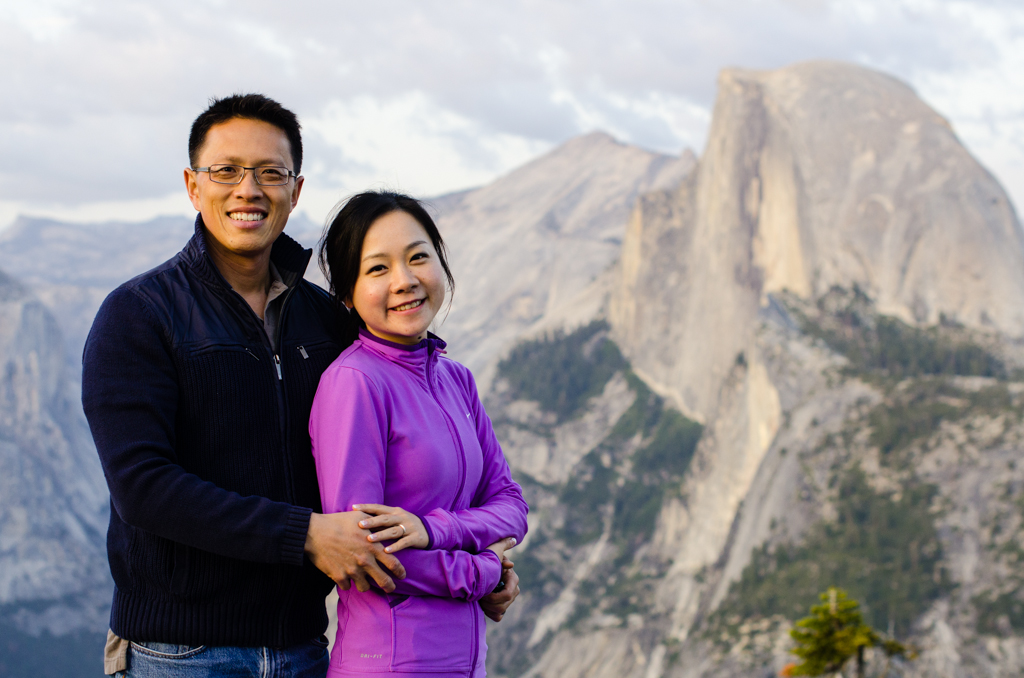
    Glacier Point is cold, windy, and exposed, but the views are stunning. The setting sun doesn’t turn anything red as we had hoped, but it is all so spectacular and breathtaking. We fight the swarms of tourists who vie for photo spots, and after scouting around, we situate ourselves on a giant boulder. The soft light from the cloud-covered sun diffuses the harshness of the landscape. This would make one of our favorite photos from this section of the trip.

    Morning of the second day arrives. We hadn’t noticed that it was already getting late, and by the time we’re ready, it’s time for brunch. The Wawona Hotel makes giant breakfast portions, and we pack our leftover toast for later in the day. From there, we wind our way to Yosemite Valley.

    Although the shuttle system looks confusing on the map, it turns out to be pretty easy to use. We hop on at stop 11 and ride to the trailhead at stop 16. The Mist Trail is crowded. Squirrels along the way are fearless. Rather than beggars, they act like models posing for tourists pictures. Across the main bridge, there is the last water stop. We fill up and find a secluded corner, away from the crowds, where the waterfall and boulders make a nice photo opportunity.

    After a lot of climbing along slippery steps, we finally make it to the top of Vernal Falls. Everyone is wanting a picture at the corner of the railing, just to the side of where the water cascades down the granite lip. We get our one and only chance. All around, there are signs that warn of dangers: falling, drowning. Today, it seems that everyone is heeding those warnings.

    Instead of going back down those slick rock steps, we decide to take the long route around, cutting across to the John Muir Trail and going down along dry swtichbacks to reach that same bridge. Again, we fill with water for the rest of the journey down this trail.

    We get the rest of the afternoon to explore parts of the valley, from the store to the Visitors’ Center and theater. Exiting the park, we do a short hike to Bridalveil Falls. We’re not sure how this waterfall is more bridalveil-like than other ones, but we take a picture to illustrate what we think the name is supposed to refer to.

    Back at the Tenaya Lodge, we order cedar-plank salmon with quinoa from the Sierra Restaurant. Then, a soak in the Ascent Spa closes our quick but beautiful Yosemite experience.

    The third day is filled with driving, first through the same scenery of oak-dotted hills and expanses of crops, then through the traffic gridlock of LA. We make it to Terranea Resort and Spa later than had hoped for, but it is still before sunset.

    The peninsula is a high bluff overlooking the Pacific Ocean. There is a secluded beach just below the swimming pool where our balcony overlooks. From the many crashing waves and tidal ebbs, the boulders are polished smooth like giant smooth lopsided eggs. We then stroll along the trail to the west side, hoping to catch some glimpses of the sunset. The sun, however, is covered by a thick layer of clouds along the horizon. In the distant, there is a picturesque backlit lighthouse.

    Dinner at Mar’sel is fabulous. We enjoy some of the signature dishes there. We both agree that the roasted eggplant and ricotta drizzled with saba is one of their best creations, but the steamed black seabass with melted leeks is phenomenal as well.

    Day four marks our last before leaving the States. The eighteen miles to the airport takes nearly an hour of stop and go traffic along Highway 1. We arrive with plenty of time. This is the first of twenty passes through nine airports. The newly renovated Tom Bradley terminal is buzzing with commercial activity, and this is quite different from the old sterile boarding area of previous years. After having vegetable udon noodles for lunch, we board our flight to Shanghai and close this first chapter of our honeymoon.

  • Mount Washington

    Mount Washington

    This has been a phenomenal hiking season. Starting with summiting one of the most prominent mountains of Southern California—Mt. San Jacinto, the peakbagging list includes Mauna Kea, Mount Whitney, and now Mount Washington.

    I’ve read about Washington many times. Visiting Boston for the American Society for Surgery of the Hand meeting, I knew I had to make a side trip to the White Mountains. Coincidentally, while flipping through the current issue of Backpacker, I came across a brief guide to the summit of Mount Washington via the Ammonoosuc Ravine Trail. Even though the climb was pretty much straight up the mountain, this route was more crowded than I had thought.

    The river is beautiful, cascading along the entire ascent up toward Lake of the Clouds Hut. Ice crystals over parts of the open rock face where water once flowed. Near a picturesque waterfall, frozen crystals are strewn like a spread of diamonds.

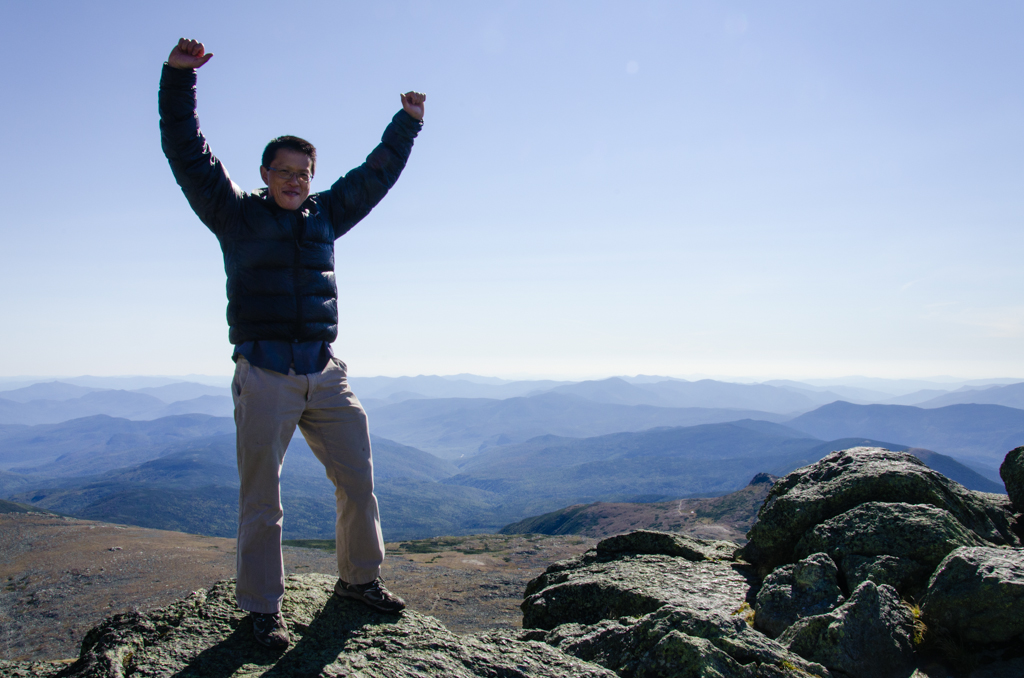
    At the hut, the tomato soup hot, hearty, and simply amazing. Just beyond, a sign warns hikers: “STOP! The area ahead has the worst weather in America. Many have died there from exposure, even in the summer. Turn back now if the weather is bad.” Cairns mark the trail in case of a white-out, but there is not a cloud in the sky. Near the summit, horizontal icicles appear, having formed sideways in the piercing wind. A Snickers bar is part of the summit celebration.

  • High Sierra Trail

    High Sierra Trail

    Preparations  |  Day 1  |  Day 2  |  Day 3  |  Day 4  |  Day 5  |  Day 6  |  Day 7  |  Day 8

    Before the trip

    It’s all about the luxury items.

    The scale is actually quite ruthless, and ever since Brad convinced me to try using it before our trip to Rainier, I’ve been letting the scale make most decisions. The pack weighs 1191 g, the sleeping bag 1038 g; and the second shirt 156 g. In total, my pack’s base weight, sans food and water, is 29 lbs. That’s including my luxury items—all the camera stuff, with the body, lens, tripod, and other accessories, making up the extra 7.5 lbs.

    But the scale doesn’t really decide our luxury items. I can’t part with my camera. Mark, third year orthopaedic resident, packs fishing tackle and extra fuel to make warm water for baths. I convince him to leave behind his pillow and the ugly pink emesis basin, which he wanted to use for doing dishes and taking warm baths.

    The daily ration of food is set out according to the hiking and eating plan—affectionately dubbed “the grid” by Kevin, then a third-year resident, on our Thousand Island Lake trip. Each meal is carefully packed into bear canisters. Mark suggests we bring fresh produce, so we include lettuce, red peppers, cabbage, kale, a tomato, lemons, herbs, garlic, an onion, and a carrot.

    Mark offers to carry the pots while I carry the tent. I figure that’s a fair trade, even though the tent weighs twice the pots. In the end, with the bulky bear canisters full of food and hydration sacks full of water, our packs turned out to be the same weight.

    This whole trip started because of Mickey, Medical Coordinator of Addiction Treatment Program at the Loma Linda VA Hospital. For the last few years, Mickey and I had discussed this trip; it had been on his bucket list. Then back in February, we met and simply set the date. My resident, Mark, was one of the first to confirm. I applied for and got our first choice for permit dates. Over the next few months, our group size grew to include two members of the Preventive Medicine Department: Wayne, Chair, and Mike, Residency Program Director.

    Hans, Director of the Masters of Science in Orthopaedics and Prosthetics Program, had graciously offered to drive us up to Visalia. We have known each other for twenty years, when we first met to finish the lacquer coat on my lute using his HVLP spray gun. His wife, Mary Ann, was in my med school class.

    We all convene at Mickey’s house. First, there are introductions: Mickey, Wayne, Mike, Hans, and Mark. Mickey shows off his little waterproof notepad; he’s going to jot down thoughts while on the trail. The overhead carrier and the back of the car are overstuffed with backpacking gear, but it all fits. During the four-hour drive north, we share a little about ourselves.

    In Visalia, we check in at the Hampton Inn and spend the night. Since the continental breakfast line doesn’t open until 6:00, Mark and I have an early in-room breakfast that we prepared ahead of time: apples and coffee from the hotel, hard-boiled eggs from home, and coffee cake with trail mix.

    We’re all ready when the shuttle arrives in front of our hotel, right on the dot, at 6:07.

    Onboard, Mark explains to us that he is wearing his wedding band on a cord hung around his neck. He makes a phone call to his wife Sarah to tell her that. Mickey will later correct him: “You’re supposed to say that the ring is hanging in by my heart.” I snap a picture of Mark on the phone with the ring on a rope and send it to Sarah.

    After winding up the mountain, we step into the Lodgepole Ranger Station’s backcountry office. Ranger Ben gives us all the regulations, and I pull the permit for 7 hikers, because Lucas and Ashlene couldn’t make it for this first part of the hike but will join us later. Mark takes pictures—later to be lost—of the fact sheet depicting fishes that are protected below 9,000 ft. Ranger Ben didn’t seem to concerned anyways: “Read this, and you’re on your own out there.” As we turn to leave, he says, “Oh, I almost forgot. You guys will be in the Whitney zone, so here are wag bags. Take a few extra.” We all dread when we will have to use and carry them out.

    From Lodgepole, the driver takes us directly to Crescent Meadow, putting us there 45 minutes ahead of schedule. We’re now all set for what would be an epic hike across two major mountain passes, Kaweah Gap in the Great Western Divide and Trail Crest along Mt. Whitney’s ridgeline, traversing 72 miles to end up at Whitney Portal. I have my camera ready, and Mark wields his fishing pole and totes comfort fuel.

  • Mauna Kea

    Mauna Kea

    We could have just driven up there, against the car rental policy. I didn’t actually read the verbiage, but according to a lot of websites, most rental car companies prohibit driving up the road from the Mauna Kea Visitor Information Station to the top. So, we decided to hike it.

    Joining me are my senior residents: Krysten Bell and Rob Quigley. We were all there for the Western Orthopaedic Association meeting, and this hike is part of our Big Island excursion.

    Early Saturday morning, still in the thick of the Hilo rainstorm, we get up early, enjoy a full breakfast, and jump into our cars. Driving up Saddle Road, we remain engulfed inside this large cloud. Right at the junction to turn off, we meet clear skies, and a rainbow surrounds our car.

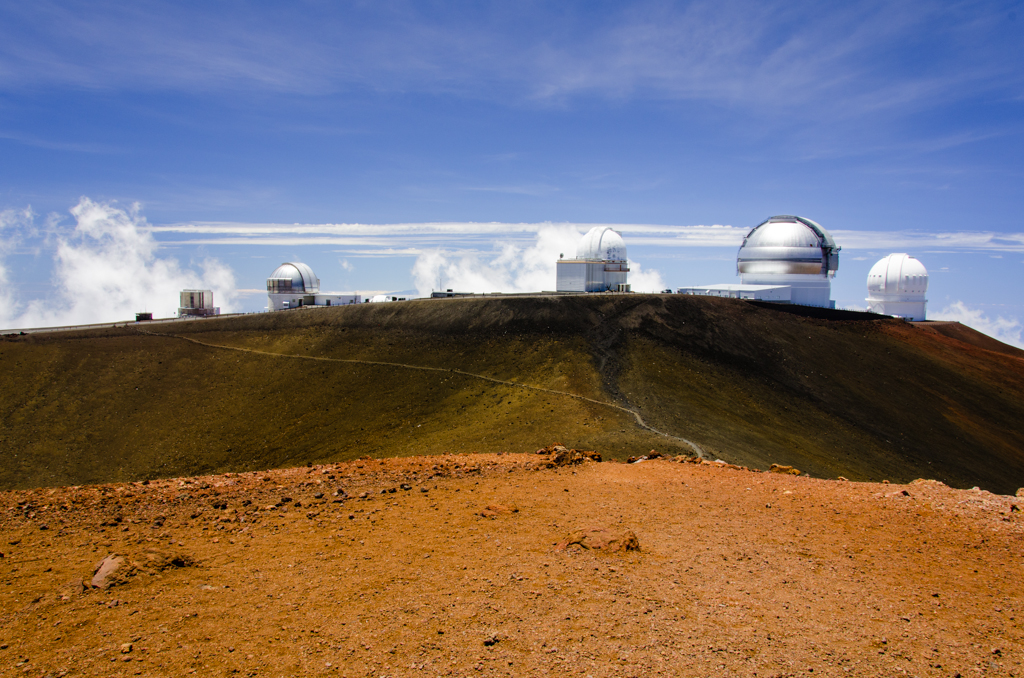
    The Onizuka Center for International Astronomy Visitor Information Station is closed, so we self-register for the hike. The Humu’ula Trail carries us away from the station and hovers above the clouds the whole time. Everything is a moonscape, but instead of plain gray, the rocks come in so many colors—mostly rust red, but also turquoise green and carbon black. We pass many false summits made up of cinder cones.

    After going through the ice age area, we reach the main road. This is the road that cars drive up. At this point, the trail ends, and we hike up the road. Several cars zoom by, but we had only met one person on the trail. The last mile is up this road.

    At the summit, also known as Pu’u Wekiu, which is a cinder cone next to some of the largest telescopes, we take in the views. Here, on this highest place of the Pacific Ocean, and on this tallest mountain on earth (33,500 ft tall, or 13,796 ft above sea level), we share thoughts about the Sabbath, sing hymns, and say prayers.

    On the way down, looking back toward the summit, we see a whole caravan of cars going on the guided tour the summit, and we are glad we got to experience solitude and the spiritual sense of the place on this special Sabbath day.

  • Mt. San Jacinto Peak

    Mt. San Jacinto Peak

    This trip was to realize what was left unaccomplished last time with the Orthopaedic Surgery Interest Group (OSIG). The goal, for those of us who are struck with summit fever at times, was to stand on Mt. San Jacinto’s peak.

    Andrew, Co-President of OSIG, had sent out the notices weeks before, and the original student group was larger. The early (5:45) departure might have deterred some on this Saturday morning; or, they simply made other plans.

    We arrive at the Idyllwild Ranger Station, self-register, and backtrack to the trailhead. At 7:40, we’re off.

    The trail to the 10,834-foot peak switchbacks up the slope pretty abruptly. Somewhere along Fuller Ridge, maybe it was before, we catch glimpses of Mt. Baldy in the distance. Dense clouds and the occasional drizzle provide the refreshing coolness. Along Deer Spring Trail, a small trickle is what’s left of the creek that feeds the nearby campsite. Nearby, hidden under a large boulder, a wispy columbine ekes out its existence.

    Soon, we reach Little Round Valley, where we turned around last time because of the lighting and thunderstorm conditions. This time, it’s much different—gravel bed instead of streams; the corn lilies and other wildflowers are still green, able to find and suck up water from beneath the forest mulch layer.

    Having taken plenty of breaks, we reach the summit five hours after leaving the parking lot. It’s my first time standing on the peak of this mountain. Here, we take in views of the San Bernardino mountain range and the Coachella Valley below. It’s overcast, windy, and cold. After having a quick lunch and taking some summit pictures, we head to the historic stone shelter.

    The 45-minute rest at the summit area could have been longer. The hike down went faster, but it’s harder on the knees. There is little time for napping.

    We make it down to our cars before 5:00. Looking at the trail mileage sign again, I think the signed 5¼ miles is wrong. The Forest Service website states 6 miles one-way, and another site says 13.2 round-trip. I think this latter number is closer to the actual mileage. Nevertheless, it’s good to have made it to the top. Summit fever—cured!

  • Marion Mountain Trailhead to Little Round Valley
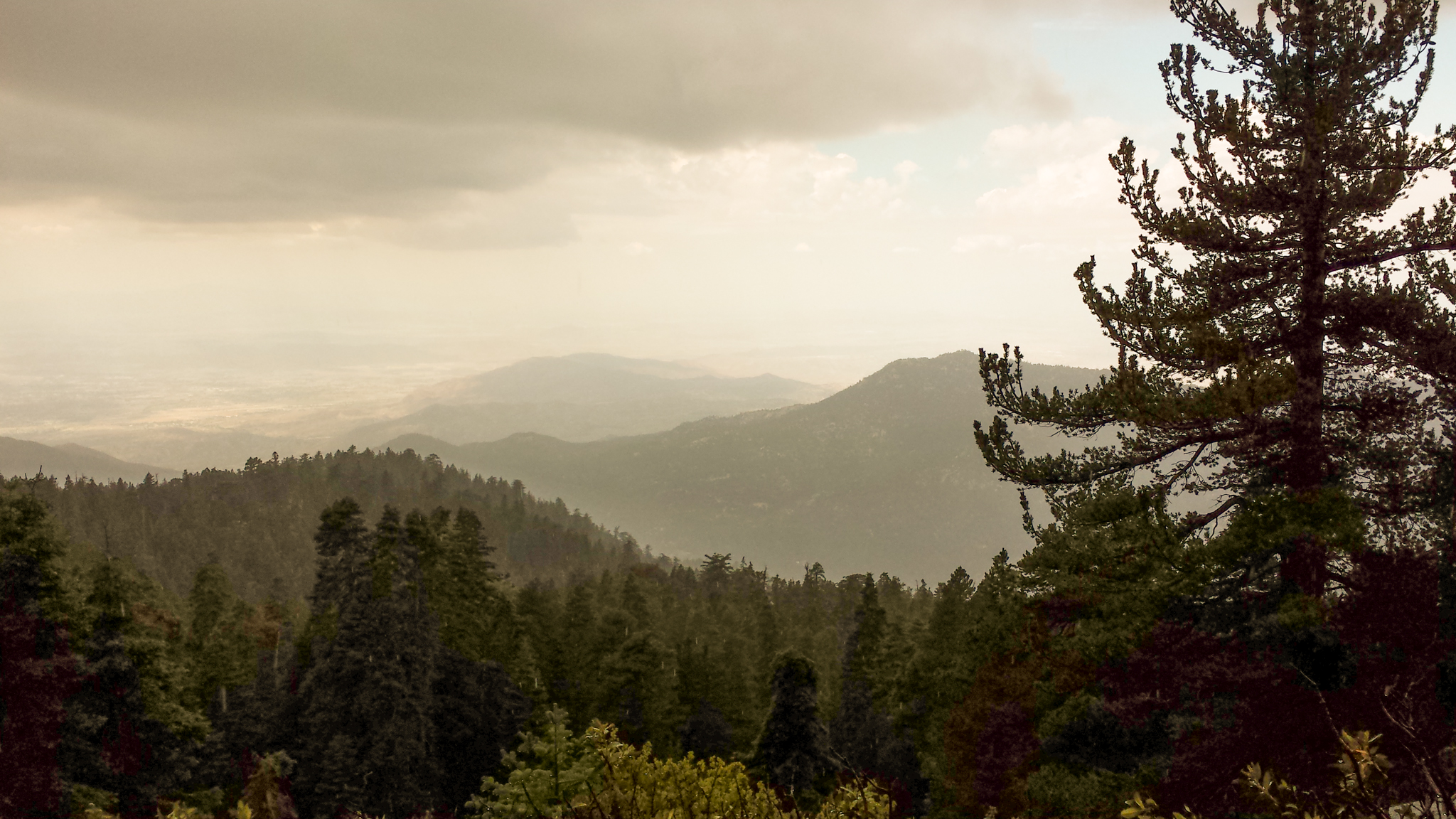
    Marion Mountain Trailhead to Little Round Valley

    We had hopes of making it to the summit. Jackson and Corey had planned this trip for the Orthopaedic Surgery Interest Group weeks ago, but today, thunderstorms and lightning threatened the exposed peak. We turned around at Little Round Valley, which was just a little more than a mile from the top. A small group did make a summit bid. We returned under refreshing rain.

  • Mono Basin and Little Lakes Valley

    Mono Basin and Little Lakes Valley

    This first day of the trip, we arrive safely at the Mosquito Flat backpackers’ campground. Brad, Grant, and Max had gone up earlier to get the bear canisters and to pick up the permit, which was in my name, and Jeff and Jeong Mi rode in my car, leaving behind all cell and data connection; we’ll be unplugged for the next few days. We had met up in Bishop and had dinner at the pizza restaurant at the north end of town. Now at Mosquito Flat, we enjoy dessert of hot cider with dark chocolate. Grant and Max make a warm campfire, and soon, it starts to rain.

    The gentle drizzle continues for the whole night, and by the next morning, everything outside the tent is completely soaked. We organize all of the food according to the grid, and then we pack up and set out toward Mono Pass. Cloud cover cools our climb above treeline. Right at the Pass, we stop for lunch, and it’s here that Max starts to develop altitude sickness. We quickly cross over into Sierra National Forest, descend to Golden Creek, and then push on to Fourth Recess Lake.

    A tall waterfall feeds Fourth Recess Lake, which stretches out like a fallen leaf, the waterfall being the stem. Clean up feels so good after a long day of hiking. After dinner, we sit around sipping hot cider and watch the sky turn from blue to purple to black.

    Friday is a short day. The lake is a mirror this morning. After breakfast, we take the short hike up into Pioneer Basin. We decide to hike to the far end of Lake 2, where a beautiful lakefront campsite awaits. On this layover day, I hike up to the ridge just east of our private lake, and from there, I have a birds-eye view of Mono Pass and Fourth Recess Lake. Dinner tonight is tom kha soup with Thai peanut noodles followed by dark chocolate cheesecake.

    This wide open basin provides a great backdrop for night photography. The crescent moon sets behind Mt. Hopkins. Soon, stars emerge on the cloudless sky.

    We all get up early on Saturday, as we are nervous about making it back across Mono Pass. Again, Max feels the effects of altitude around treeline. After a short break at the drainage of Trail Lakes, we make the final summit push. We quickly descend to the meadow below Ruby Lake, where the boys take a nice long nap to recover.

    The original plan was to make it to Chickenfoot Lake, but now out of energy, we are glad to just settle down at Marsh Lake in Little Lakes Valley. This turns out to be a charming location—a small private lake lined with wildflowers. We make miso soup and curry with rice for dinner and go for a short walk to Heart Lake before turning in.

    On this last day, I am the first to get up to catch the first light. Again, this lake is like a mirror. Only a few of us have breakfast, some choosing instead to wait until we get into town. The hike out is much shorter than expected. After loading up the car, we drive into Bishop and have brunch at Erick Shat’s Bakkerÿ. On the way back, we stop in Lone Pine to return the bear canisters.

    The rest of the trip home goes smoothly. Along the way home, we all plug back in, and at the same time, remembering what it was like to be unplugged for a few days while making memories that will last a lifetime.

  • Mount Baldy Peak

    Mount Baldy Peak

    Rob arranged this hiking trip up Mount Baldy, and four of us from orthopaedics joined in.

    We left Loma Linda a little after 5:00 am. By 6:20, we were on the trail, ascending up the Baldy Bowl Trail, otherwise known as the Ski Hut Trail. At the Hut, we have breakfast over scenic views. The mileage varies, but on one report, it is 4.2 miles from the Manker Flat parking lot to the summit via the Ski Hut.

    After an early lunch at the summit, we descend 3.2 miles via the Devil’s Backbone to Baldy Notch. We all get Gatorade at the lodge to rehydrate. From there, it’s 3.6 miles back to our cars.

  • Hollywood Sign

    Hollywood Sign

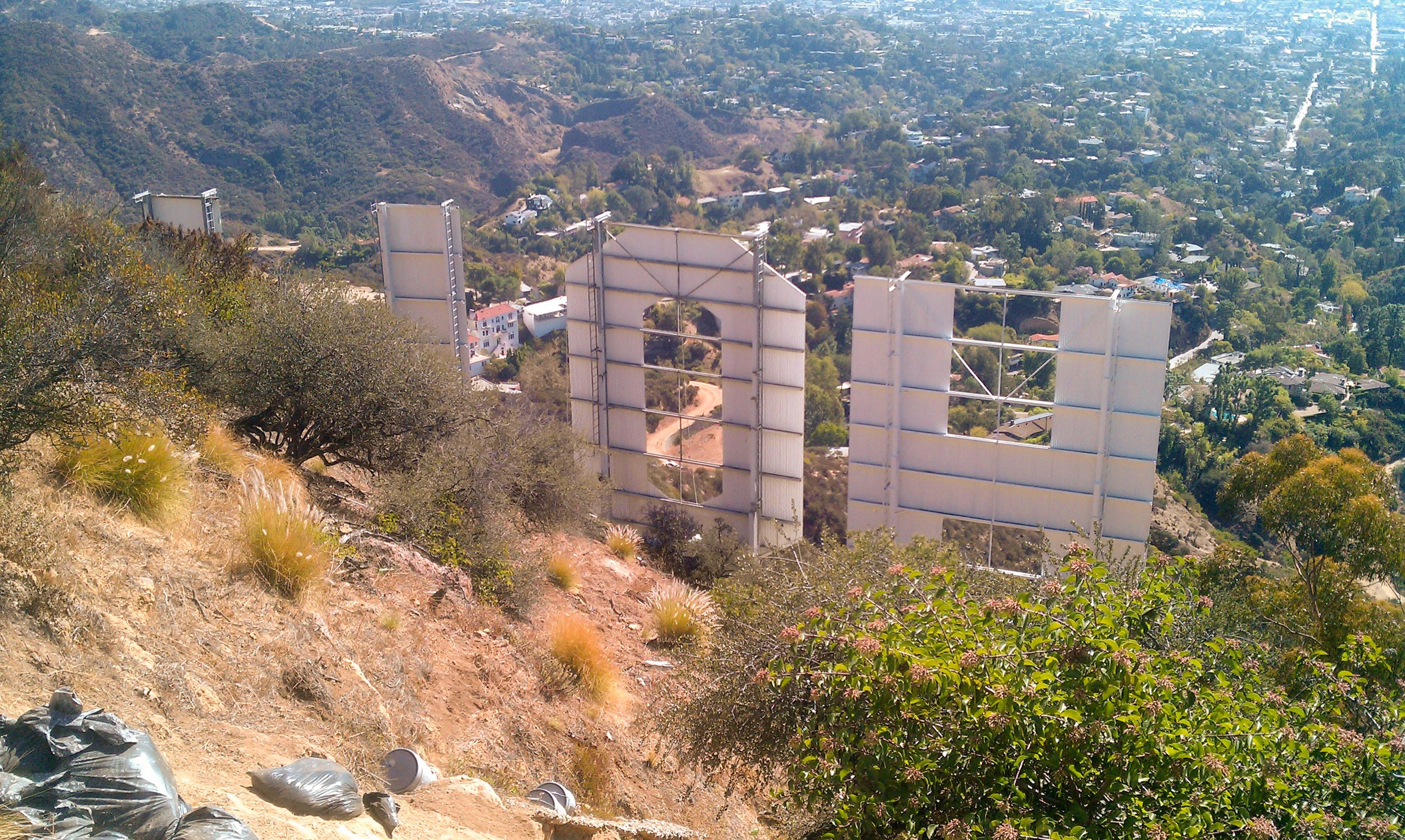
    The hike to the Hollywood Sign started at the end of Beachwood Drive, just by Sunset Ranch. The horses from the ranch dusted up the first part of the trail—not just from hoofs and horseshoes. After the fork to the left, it got much better. The midday sun was beating down pretty hard. Just before the top, we had nice shade and beautiful sweeping views to the north. From the summit, the Hollywood Sign stood below us, fenced of and guarded by high surveillance equipment. A small dwarf tree provided some shade. The view was a 360° panorama. Coming down, we visited Griffith Park as well.

  • San Bernardino Peak

    San Bernardino Peak

    It started from a Facebook invitation, where I basically invited everyone who I thought would be interested in going.

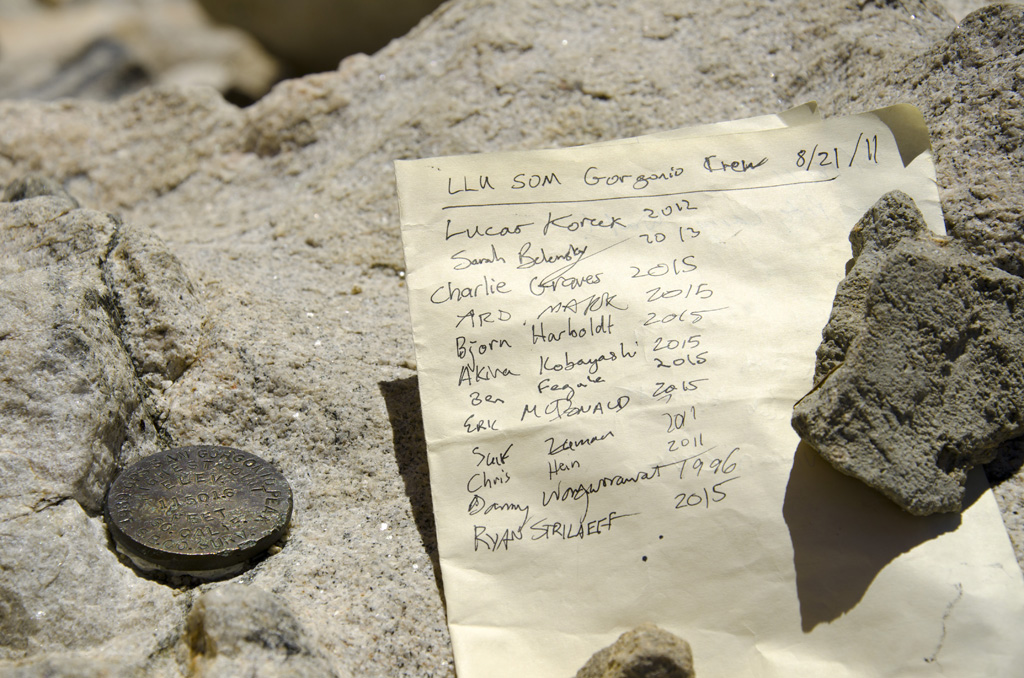
    We all met in the Allen Way cul-de-sac just before 6:00 this morning and drove to the parking lot. There were orthopaedic residents, Ben, Mark with Sarah, and Lucas; medical students, Chris, Andrew, Charlie, Bjorn, and Matt; and an engineer, Mike.

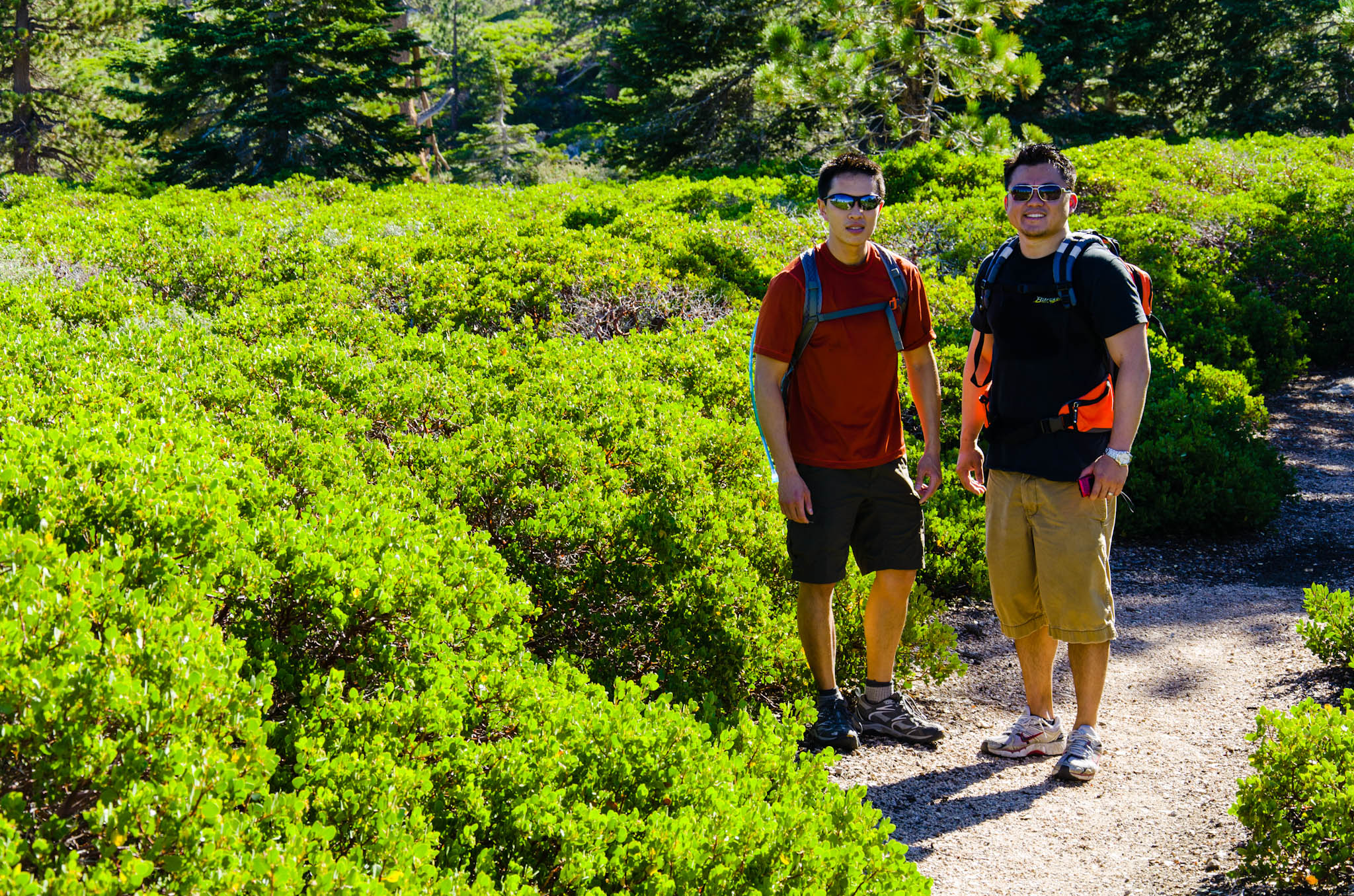
    The hike began at 6:50. We saw sunrise from behind the ridge line and trees, and shortly after, we ascend slopes of manzanita bushes. Ben develop a blister early in the hike. Along the way, I was worried about the water situation, but luckily, Limber Pine Springs was a decent trickle.

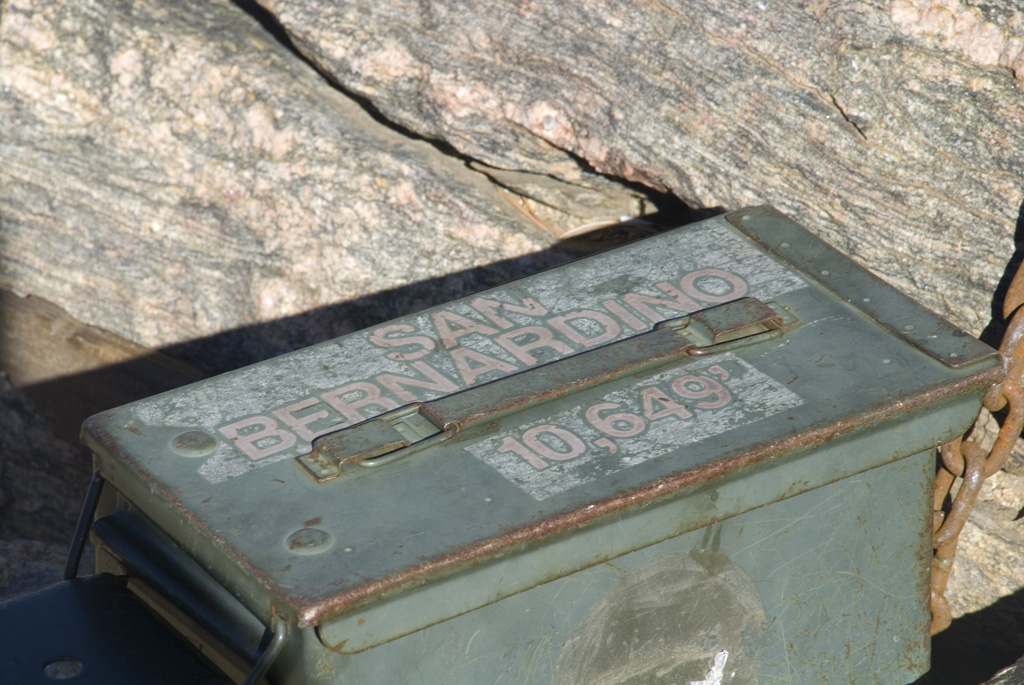
    At 11:40, we reached the false summit at the overlook, but by this time, fog had rolled in and we were shrouded in the clouds. Soon thereafter, we arrived at the Colonel Washington Monument and learned about the survey of Southern California. The hike to the actual summit took another half hour. We had another meal there, and a few of us took naps.

    The cloud cover and downpour refreshed all of us on the way down. I think hiking poles made a difference in preventing iliotibial band syndrome like the last time on the San Gorgonio hike.

    What a blessed day, with beautiful scenery, bright sunrise, blue sky, rolling clouds, cold rain, wholesome exercise, and great company.

  • Portland, Columbia River, and Silver Falls
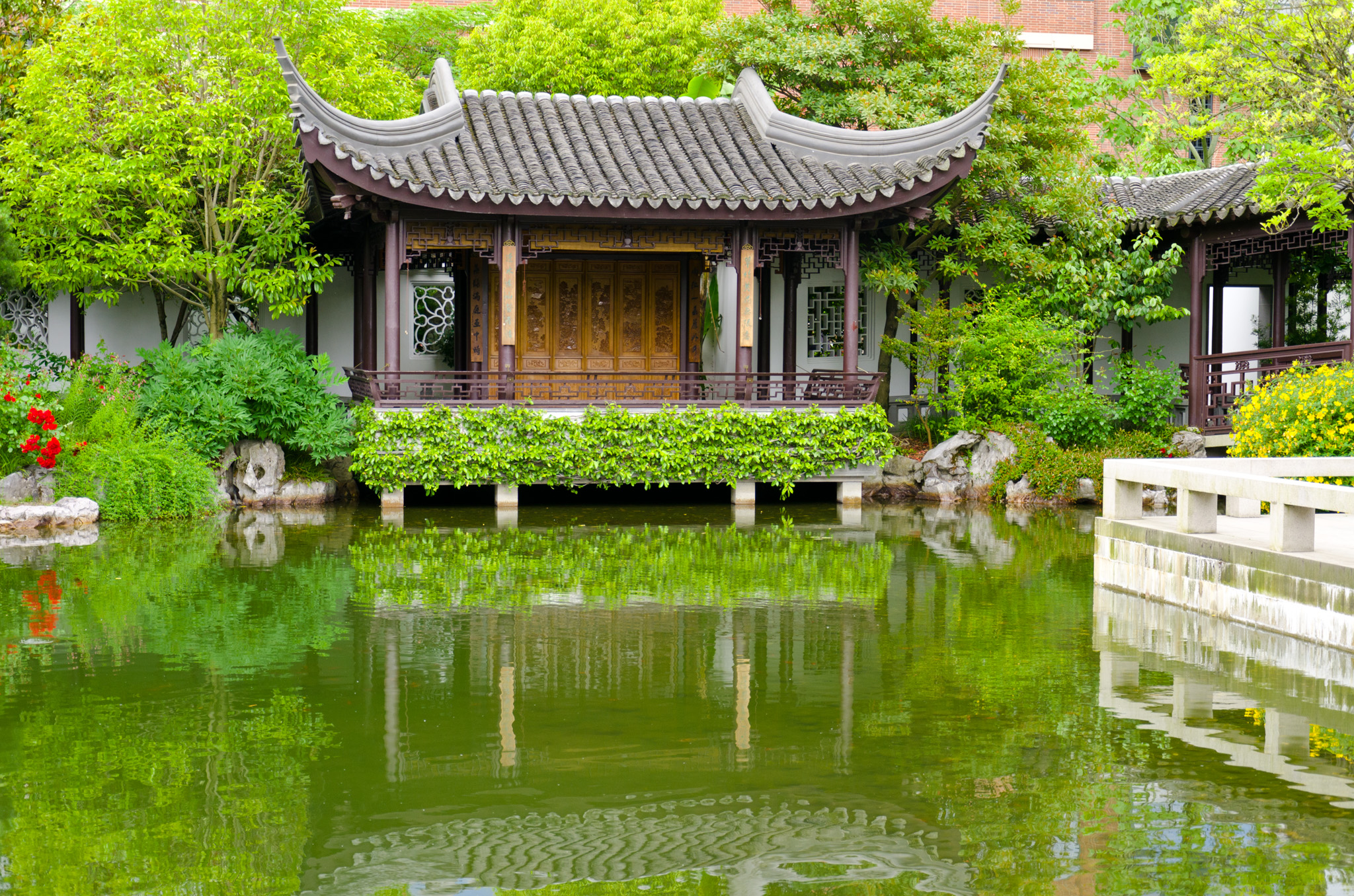
    Portland, Columbia River, and Silver Falls

    Arriving in Portland on Tuesday gives a slow transition to the next part of this extended time away. Activities for the Western Orthopaedic Association starts on Wednesday.

    I spend most of Wednesday morning touring the Portland Chinese Garden 蘭蘇園, taking time to follow the self-guided tour explained in the brochure. For the last stop, I have chili bamboo shoots, seasoned tofu, and tea eggs at the quaint tea house overlooking the Zither Pond. I also meet Dr. Yang JiYu, who performed the erhu for me. He wanted to write me some calligraphy, and he asked me to pick a poem.

    On Geese Turning Back 歸雁
    Why do they turn back when they reach the Xiao and Xiang?
    The water is green, the sand is bright, and both shores are mossy.
    Twenty-five strings echo beneath the moon at night;
    Unable to bear such melancholy, they all fly away.
    瀟湘何事等閒回
    水碧沙明兩岸苔
    二十五絃彈夜月
    不勝清怨卻飛來

    Afterwards, I meet Jim Binkley at his home. He talk about the guqin, and he shows me his workshop. It was through his translation of the 與古齋琴譜 that I was able to construct the instruments.

    Then, there is the Orthopaedic Research & Education Foundation (OREF) event that first day. As always, it’s good to renew friendships.

    The main meeting starts on Thursday. Chad’s poster is up. The Howard Steel lecturer weaves a captivating story about the Lewis and Clark expedition from the point of view of medical care. After the meetings, I drive out along the Columbia River Gorge and take the scenic route from Horsetail Falls, beside Multnomah Falls, and ending at the Portland Women’s Forum. I return just in time for the outing to the World Forestry Center for the dinner reception.

    Friday is similar, with most of the meetings ending by early afternoon. The healthcare policy talks are interesting.  Then, Barth and I drive down to Silver Falls State Park and do a scenic 10-mile loop hike—Trail of Ten Falls, including side trips on spur trails. This place is a photographer’s paradise. We end up being late to the gala event.

    I had originally thought I could do the 17-mile Benson Ridge to Eagle Creek loop, but Sabbath morning is lazy, and I make it to the trailhead at 11:00 after taking pictures of Barth presenting his paper. Instead, I hike the Eagle Creek trail, out-and-back to Tunnel Falls. Several areas of vertiginous cliffs are fitted with a mini version of the via ferrata. Although it’s more about the journey than the destination, Tunnel Falls is quite the climax. There, I cool off in the fall’s spray. On the way back, I watch guys jump into Punch Bowl Falls and survive.

    On my way to the airport this morning, I stop by the Oregon Museum of Science and Industry (OMSI). The most interesting is the demonstration of probability theory and the Gaussian curve; set up like a pinball machine, I think this is the best illustration I’ve seen. The ferrofluid station on nano materials is fascinating. There is also the National Geographic exhibition, titled Ocean Soul, featuring the works of Brian Skerry. His underwater photography is breathtaking and inspiring at the same time.

    Back in California, I step off the plane to 93°F temperature. After being away to the northern latitudes for nearly two weeks, welcome back to Southern California.

  • Mount Rubidoux

    Mount Rubidoux

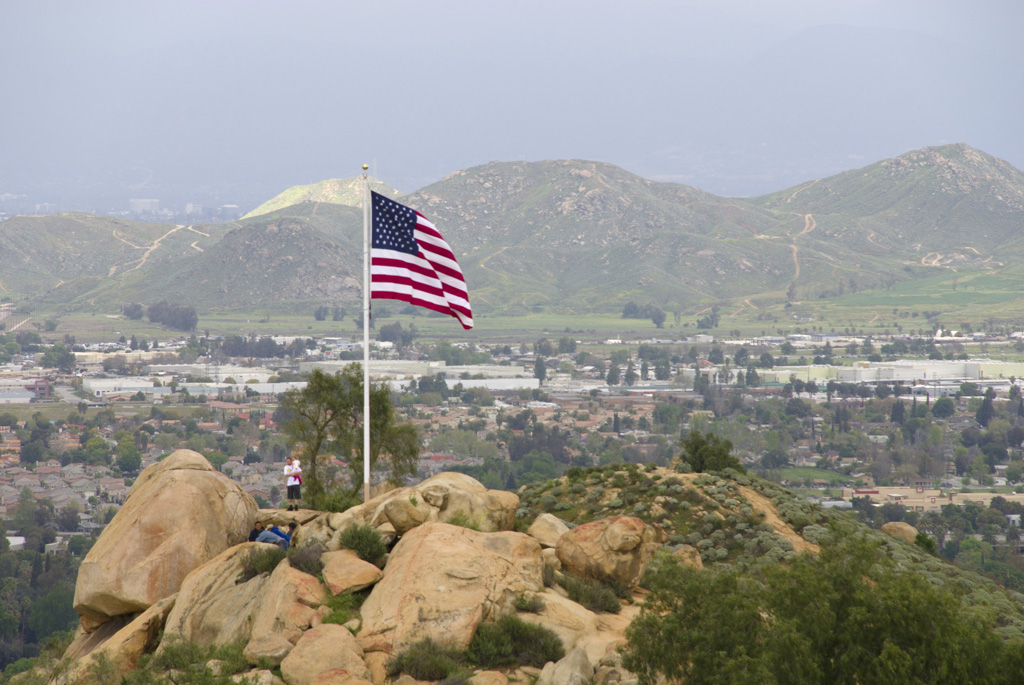
    We had a great time hiking up Mount Rubidoux. I got to bring our new puppy Durian out for an excursion.

  • San Bernardino Peak

    San Bernardino Peak

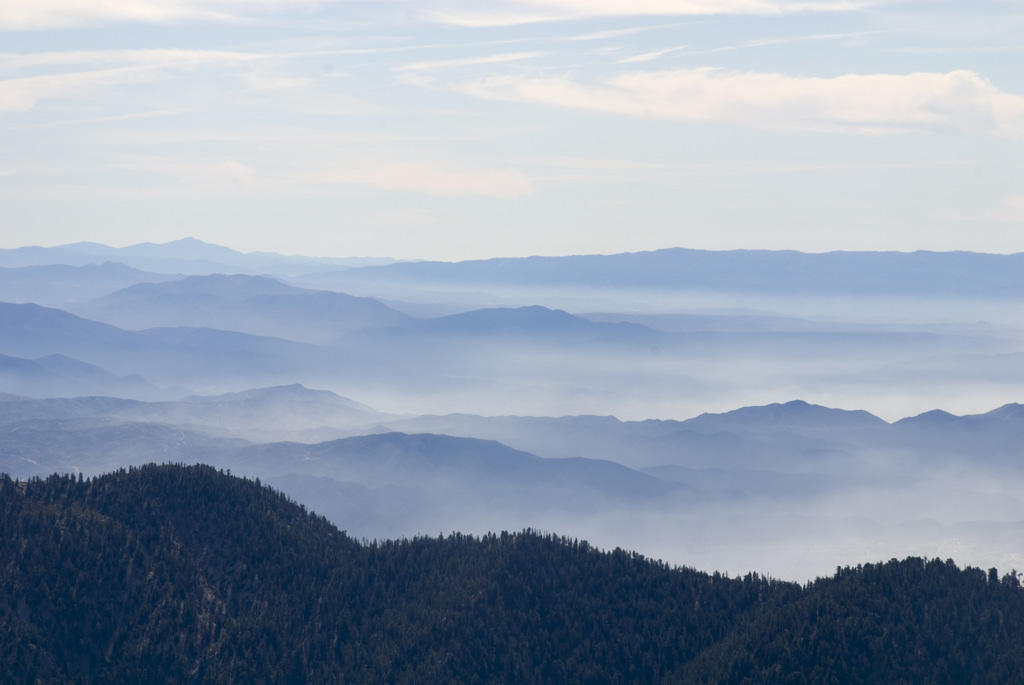
    A group of us climbed San Bernardino Peak from the trailhead near Angelus Oaks. The weather, of course, was beautiful. Views from the top were breathtaking, especially at the turn just below the survey monument. These pictures are courtesy of Rob Quigley and Adam Lorenzetti.

  • Angwin, Pt. Reyes, Santa Rosa

    Angwin, Pt. Reyes, Santa Rosa

    I just got home from a trip to Northern California.

    The first day was spent driving to Angwin, arriving quite late at night. The next day, we went with Auntie Plerm and Uncle Michael on different tours—The Castle, Sepay olive oil company, Budweiser factory, and Jelly Belly. After some shopping and dinner, we went to the Chun’s place.

    Bryce, Kara, Alice, and I headed into the backcountry at Point Reyes National Seashore. The first day, we hiked from Bear Valley Ranger Station to Sky Camp. The next day took us down to the beach, where we arrived at Coast Camp shortly after noon. We napped away most of the afternoon. Saturday’s hike was along the bluffs above the coast. This was the longest day with about eight miles. Birds filled the meadow above Wildcat Camp. Being not so windy, this was the warmest of the nights. For the last day, we hiked out to our car back at the Bear Valley Ranger Station and drove back to Santa Rosa.

    We had a good stay with the Chuns in Santa Rosa, recovering, cleaning, organizing, eating, sharing stories. The drive home was smooth except for the portion between the Grapevine and the 210 Interchange, where I-5 became like a parking lot. Anyways, it’s good to be home after an amazing week.

  • South Fork Trail

    South Fork Trail

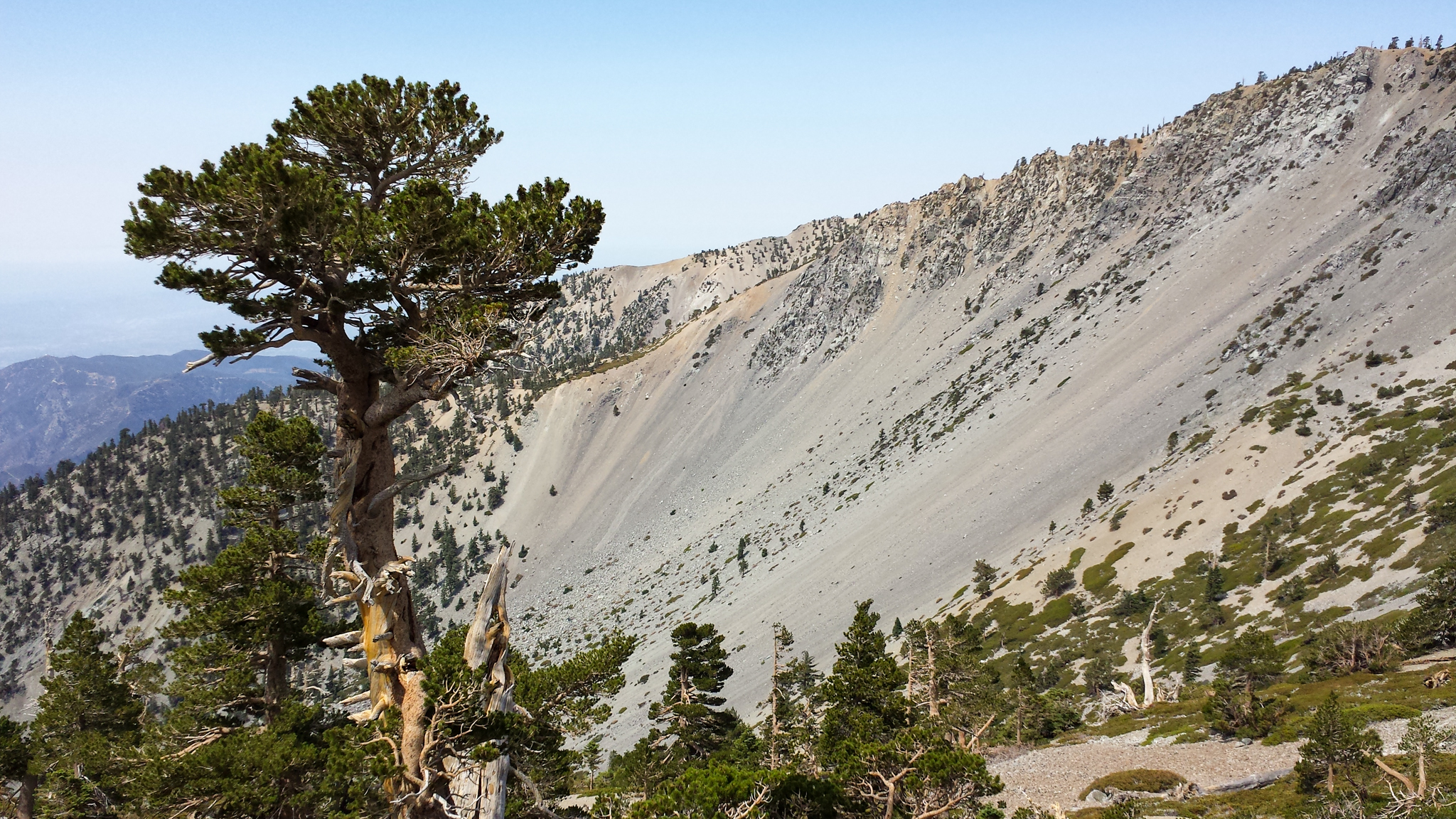
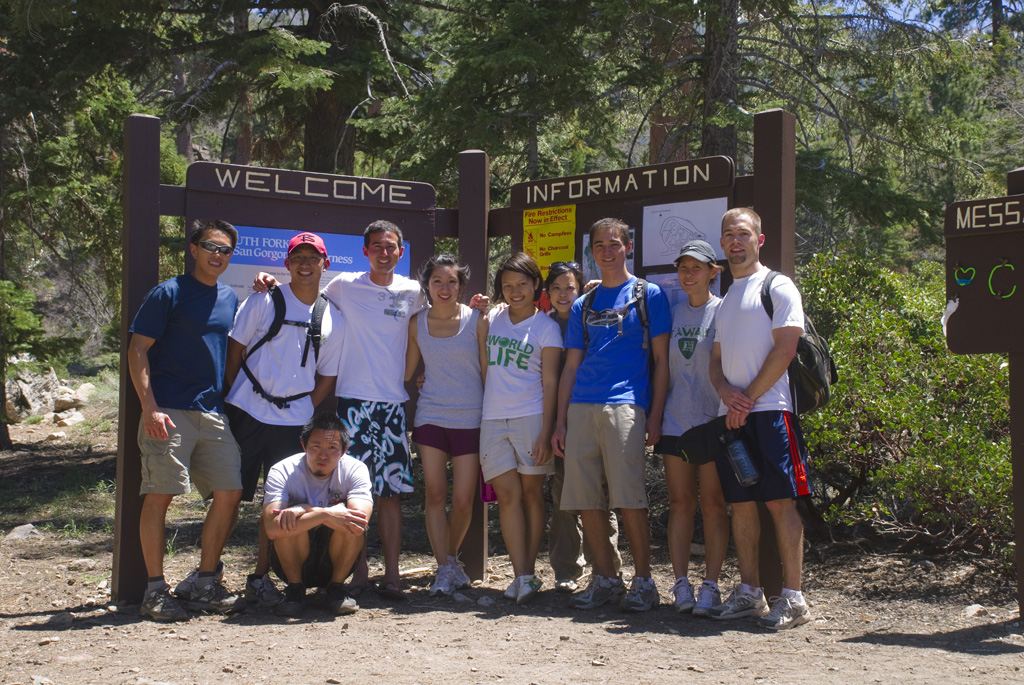
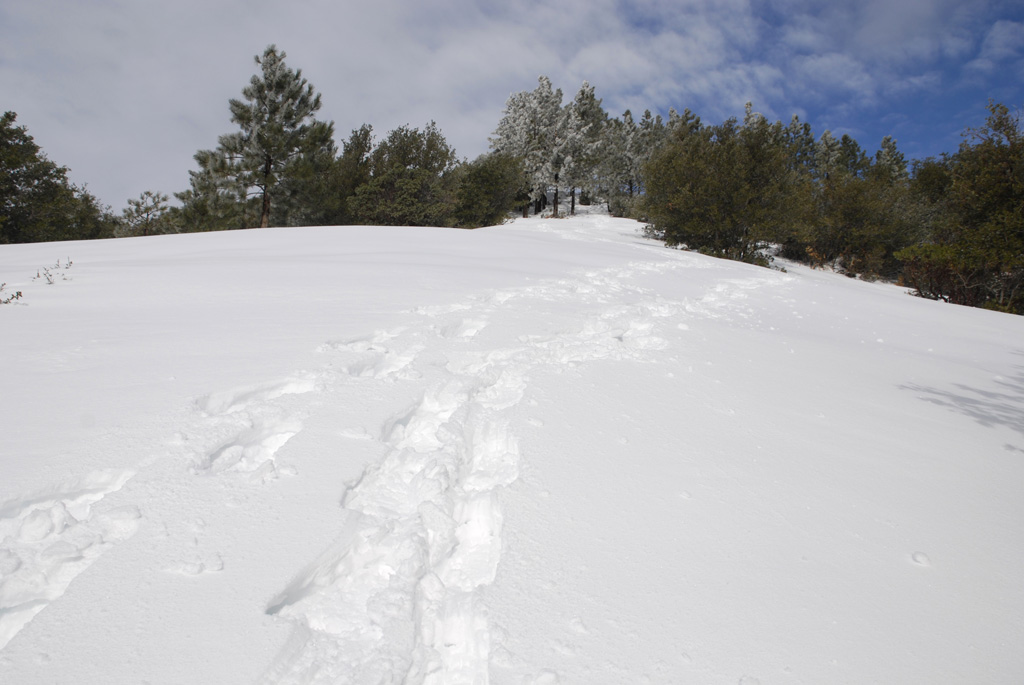
    Starting from the South Fork trailhead in the San Bernardino National Forest, a group of us hiked up passed the meadow and up to the avalanche area. After that, we turned around and headed back down the mountain.

  • Mount Woodson

    Mount Woodson

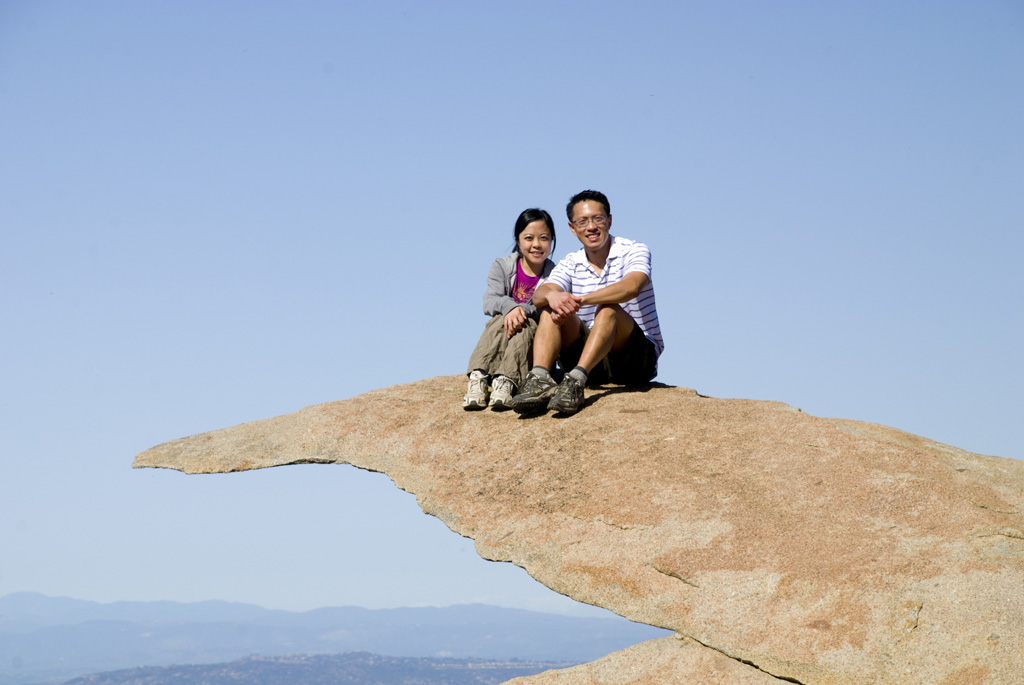
    A group of us drove down to Poway and hiked up to Mount Woodson. Near the summit, there’s an outcropping called Potato Chip Rock, which is completely fitting for its name. We had a nice picnic lunch at the top. Then, we hiked back down, and a few of us decided to ignore the signs and cross the dam at the edge of Lake Poway. They made us turn back and go around. Afterwards, we took a trip down to La Jolla and enjoyed the ocean.