ARCHIVES

Tag: 吕培源

  • Flowing Waters

    Flowing Waters

    Launched into space in 1977, the Voyager Golden Record, with a rendition of Flowing Waters 流水 by Guan Pinghu 管平湖, flew past Pluto’s orbit, left the edge of our solar system, and entered interstellar space.

    My teacher, Lui PuiYuen 吕培源, reintroduced me to this piece. While dating to some time in remote antiquity, this rendition, with 72 gunfu 滾拂 rolls, is attributed to Zhang KongShan 張孔山 of the Sichuan school from the late 19th century.

    I find the middle sections the most interesting. Starting from the beginning, though, the opening measures seem to depict the grandeur of majestic peaks. Then, a flutter of harmonics, repeated in octave intervals, along with glissandi, conjure up images of a small trickle, perhaps from fresh snowmelt. Among the towering peaks, rivulets carve channels. They coalesce into a roaring river, with churning waters bursting the banks. Again, droplets of harmonic glissandi spray the listener who sits near the cascading stream. The music broadens as the river widens into an alluvial fan on its way out to sea.

    One of the most celebrated guqin pieces, Flowing Waters gained popularity early on. More than just evoking the churning of cascading streams down tall mountainsides, this melody more importantly alludes to a deep friendship that bridges social boundaries.

    In the Spring and Autumn Period (771-476 BC), a woodcutter from the state of Chu 楚 named Ziqi 子期 developed a close friendship with a literati named Boya 伯牙. Boya was a skilled guqin player, and only Ziqi was able to recognize the meaning of whatever Boya played. When Boya focused his playing on flowing streams, Ziqi exclaimed, “How vast like the flowing waters!” Whatever Boya played, Ziqi understood. When Ziqi died, Boya severed the strings of his qin, never to play again, because there is none other who can understand his music.

    兩千年來,民間一直流傳著這樣的故事:伯牙彈琴可以表現出他的『巍巍乎志在高山』或是『洋洋乎志在流水』。而他的知音好友鍾子期,完全能夠準確地領略到他的音樂表現。因此有伯牙作《高山流水》的傳說。據說唐以後將它發展為《高山》與《流水》兩個獨立的古琴曲。 《流水》,在近代得到更多的發展,特別是《天聞閣琴譜》中所載川派張孔山的《流水》。由於它充分運用了滾拂綽注等指法,進一步表現了流水中奔騰澎湃的效果。 —節錄《古琴曲集》。

  • Songs of the Fisherman

    Songs of the Fisherman

    This is the longest piece I’ve learned. Consisting of eighteen sections, Songs of the Fisherman 漁歌, like many other guqin pieces, portray the retreat to an existence that is immersed in the natural rhythm of the universe.

    The earliest printed version dates to 1546, and the associated original preface depicts Mao Minzhong 毛敏仲 leaving his official post, embracing the Dao, following the clouds and the waters, thus escaping worldly cares.

    Several versions exist. My teacher Lui PuiYuen 吕培源 gave me the transcription by Wu Zhaoji 吳兆基. Having studied the 1945 recording by Zha Fuxi 查阜西, I blended the two versions in this rendition.

  • Guqin Lessons

    Guqin Lessons

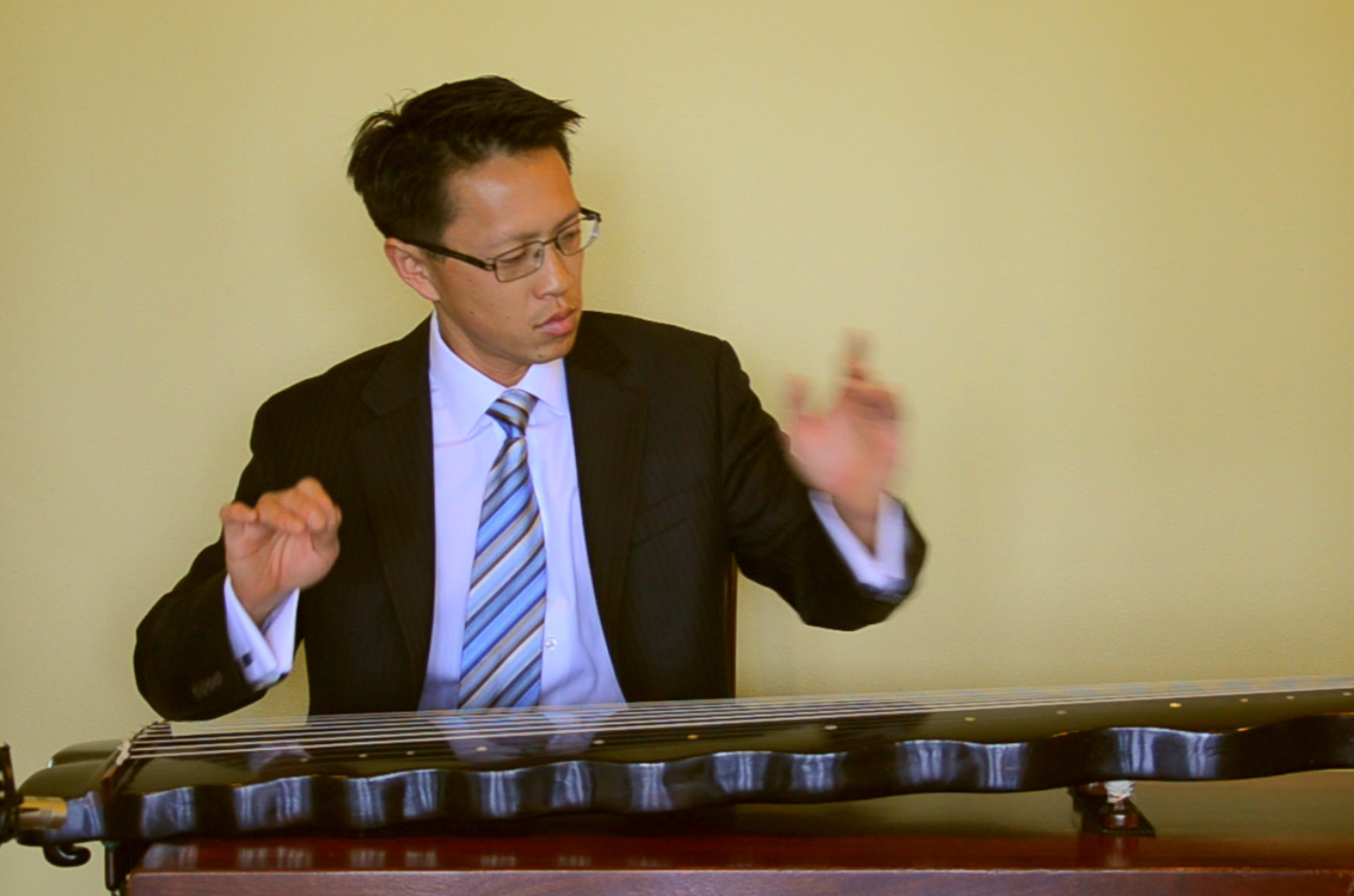
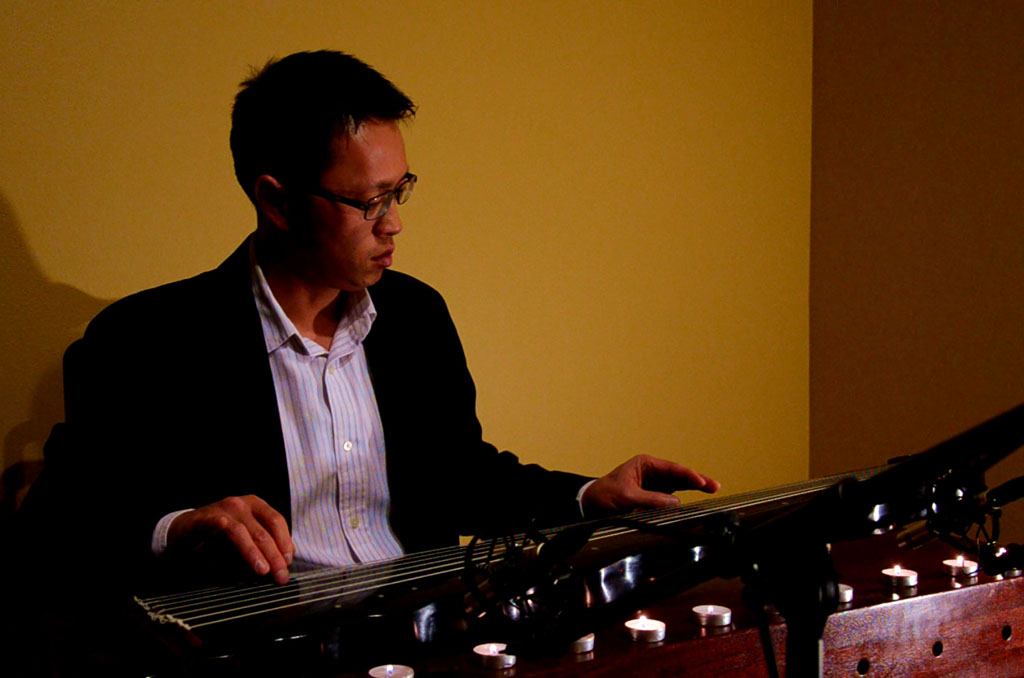
    After constructing three instruments, I finally started taking formal guqin lessons—from Lui PuiYuen (吕培源).

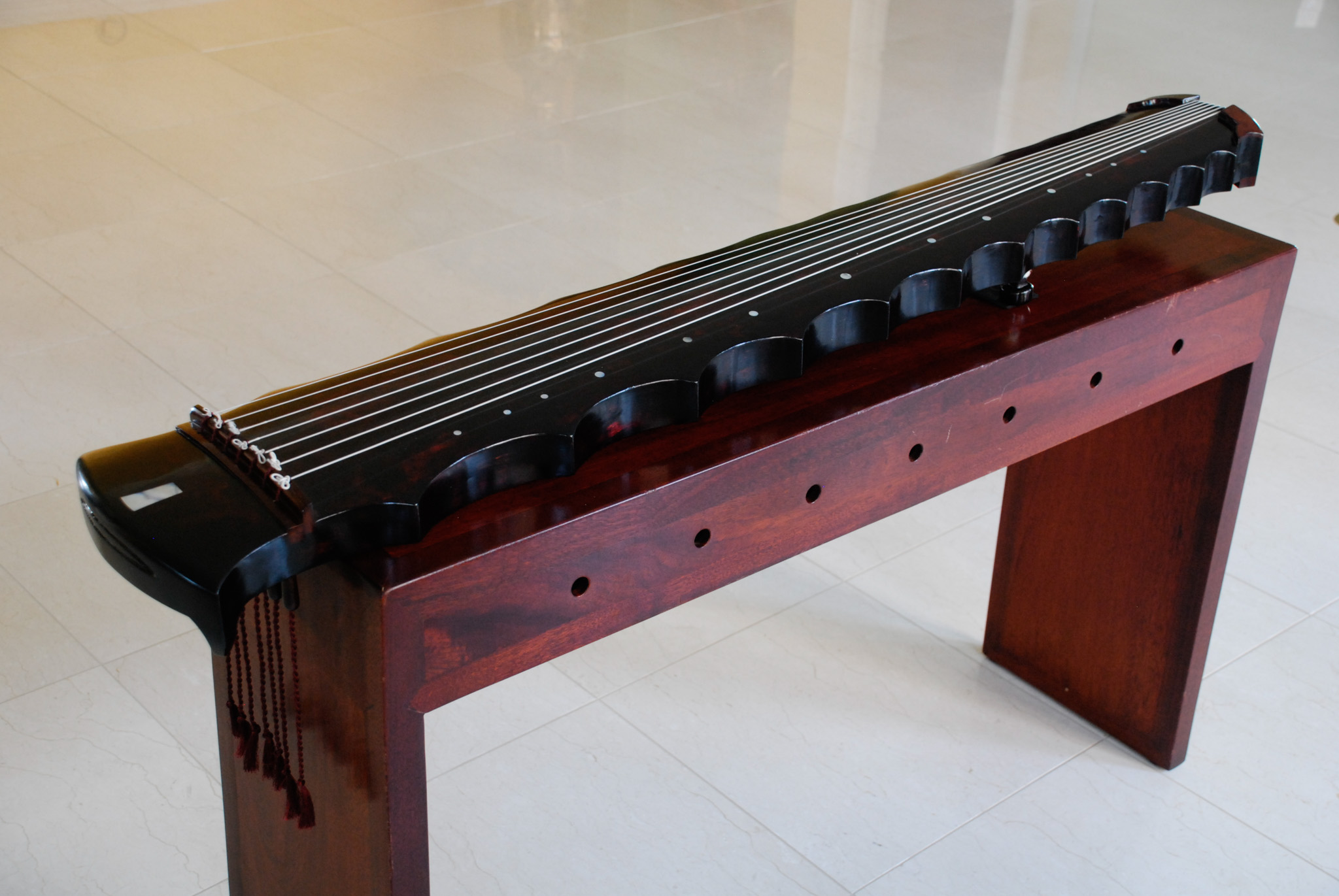
    This all came about in an interesting way. More than ten years ago, I found the 與古齋琴譜 (Abiding with Antiquity Guqin Manual, 1855, tr. Binkley) on the internet while looking for construction details. After making my first one, I decided to improve on the design, and in 2010, I was inspired to make two more instruments. I kept a construction blog, including an album of the entire process.

    Jim Binkley, who translated the 與古齋琴譜, found my blog and wrote me with some questions. He now teaches computer science at Portland State University. I also asked him if he knew of any contacts in Southern California, since the guqin is a relatively obscure instrument. He said that one of the best players still alive is Mr. Lui, and that I might contact one of his former students, Alan Yip, and get connected.

    After meeting up with Alan and later with Lui Laoshi, I started my first lesson on April 22. The curriculum started with 仙翁操 and 湘江怨. The next lesson included 古琴吟 and 秋風詞. Now, I’m working on 歸去來辭. Many of these are based on ancient poems.

    I’ll try to post recordings when I get a chance.