Tag: Flowing Water

  • Flowing Waters

    Flowing Waters

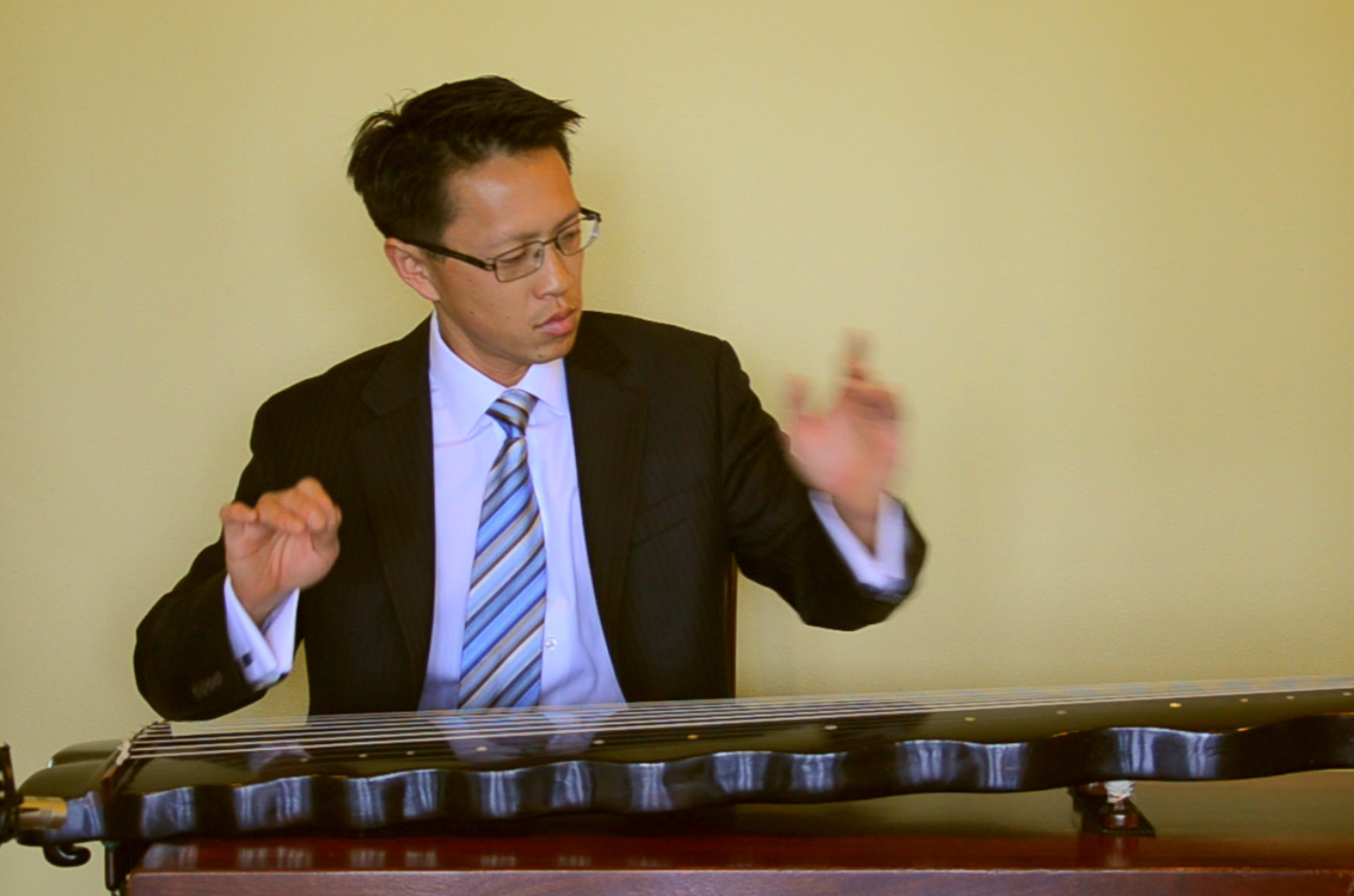
    Launched into space in 1977, the Voyager Golden Record, with a rendition of Flowing Waters 流水 by Guan Pinghu 管平湖, flew past Pluto’s orbit, left the edge of our solar system, and entered interstellar space.

    My teacher, Lui PuiYuen 吕培源, reintroduced me to this piece. While dating to some time in remote antiquity, this rendition, with 72 gunfu 滾拂 rolls, is attributed to Zhang KongShan 張孔山 of the Sichuan school from the late 19th century.

    I find the middle sections the most interesting. Starting from the beginning, though, the opening measures seem to depict the grandeur of majestic peaks. Then, a flutter of harmonics, repeated in octave intervals, along with glissandi, conjure up images of a small trickle, perhaps from fresh snowmelt. Among the towering peaks, rivulets carve channels. They coalesce into a roaring river, with churning waters bursting the banks. Again, droplets of harmonic glissandi spray the listener who sits near the cascading stream. The music broadens as the river widens into an alluvial fan on its way out to sea.

    One of the most celebrated guqin pieces, Flowing Waters gained popularity early on. More than just evoking the churning of cascading streams down tall mountainsides, this melody more importantly alludes to a deep friendship that bridges social boundaries.

    In the Spring and Autumn Period (771-476 BC), a woodcutter from the state of Chu 楚 named Ziqi 子期 developed a close friendship with a literati named Boya 伯牙. Boya was a skilled guqin player, and only Ziqi was able to recognize the meaning of whatever Boya played. When Boya focused his playing on flowing streams, Ziqi exclaimed, “How vast like the flowing waters!” Whatever Boya played, Ziqi understood. When Ziqi died, Boya severed the strings of his qin, never to play again, because there is none other who can understand his music.

    兩千年來,民間一直流傳著這樣的故事:伯牙彈琴可以表現出他的『巍巍乎志在高山』或是『洋洋乎志在流水』。而他的知音好友鍾子期,完全能夠準確地領略到他的音樂表現。因此有伯牙作《高山流水》的傳說。據說唐以後將它發展為《高山》與《流水》兩個獨立的古琴曲。 《流水》,在近代得到更多的發展,特別是《天聞閣琴譜》中所載川派張孔山的《流水》。由於它充分運用了滾拂綽注等指法,進一步表現了流水中奔騰澎湃的效果。 —節錄《古琴曲集》。

  • Guqin adjustments

    Guqin adjustments

    On the luoxia guqin, I carved some off the nut and lowered it so that the strings would be closer to the surface. This proved to be a good adjustment. Playing the instrument has been absolutely delightful. I refreshed my memory on some of my old repertoire. The first piece I played on it was 流水 (Flowing Water), as that was my goal when I first learned the piece this year. Other pieces I tried included 陽關三疊 (Farewell at Yang Pass), 梅花三弄 (Three Variations on the Plum Blossom), 平沙落雁 (Wild Geese Landing on Calm Sands).

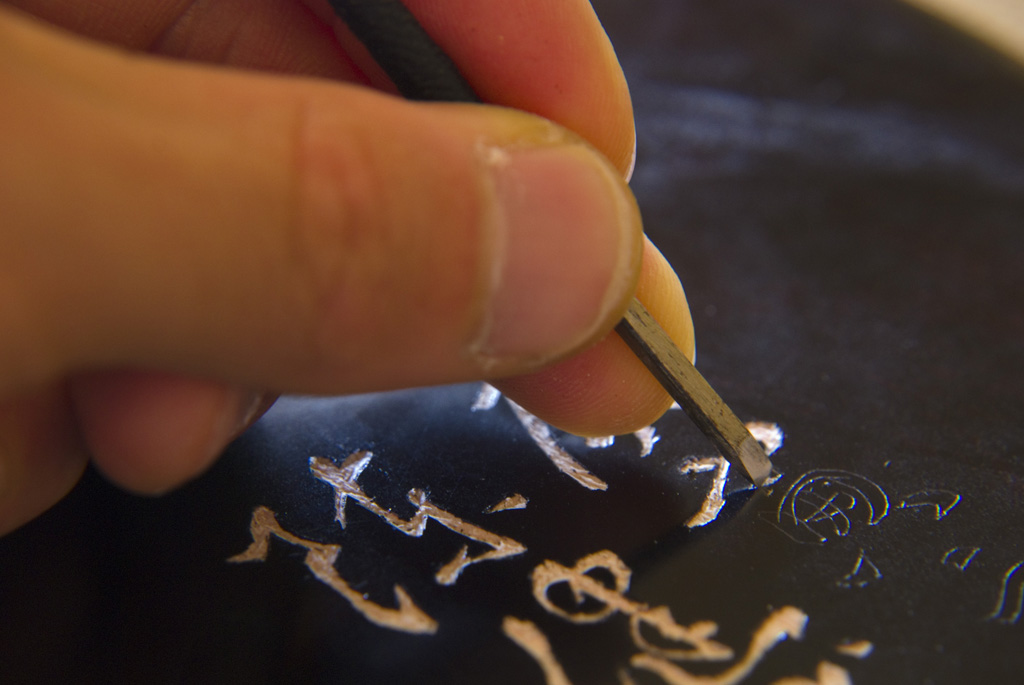
    In the meantime, I’m working on the jiaoye guqin. It’s almost done. After finishing the other instrument, I wanted to quickly wrap up the entire project, now that I’m so close to the end. I thought of not carving the small inscriptions on the second guqin, but I decided to just go ahead and do it. Like the first time, it was painstaking. I finished that today, and I’m glad I persevered.

    The next steps in this guqin construction project is to complete the final sanding and polishing of the jiaoye guqin. Then, I need to make tuning cords for it and attach the strings.

    For the luoxia guqin, I ended up using nylon-wound metal strings. For this second guqin, I’m thinking of trying out silk. The sound will be more delicate, but this instrument has a pick-up system embedded within.

  • Inspired to recreate the guqin

    Inspired to recreate the guqin

    For the last month, I’ve been practicing the guqin 古琴 a little more. In time for the Prunus mume that opened and faded, I finished learning 梅花三弄 (Three Variations on the Plum Blossom). Now, I’m working on 流水 (Flowing Water), which is significantly more difficult.

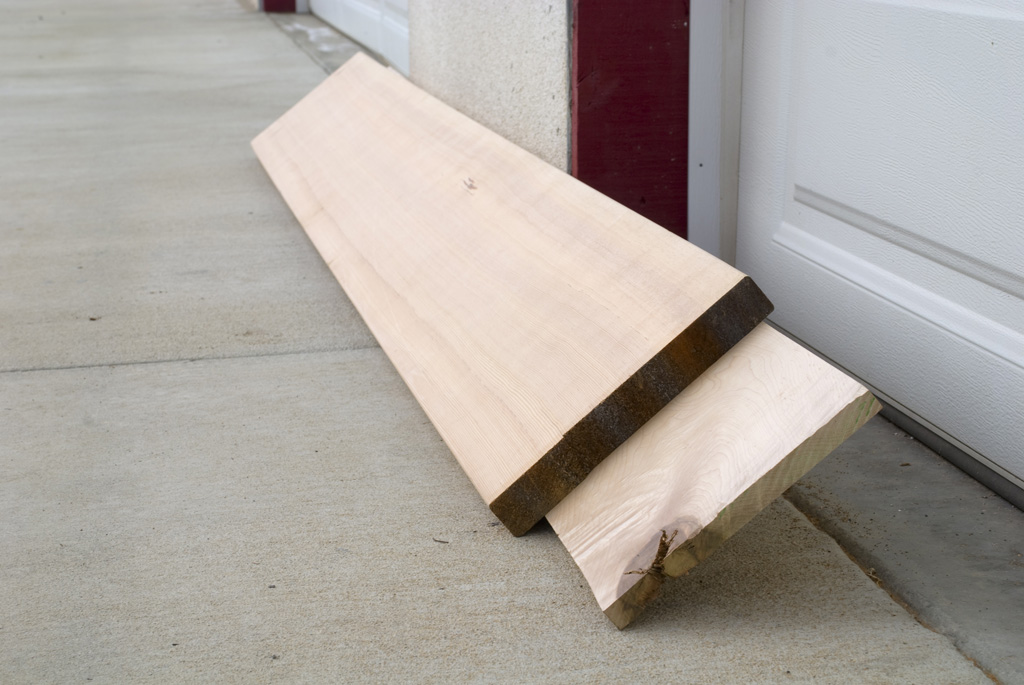
    Anyways, I got inspired to make another guqin. The one I’m playing on was made ten years ago based off of 與古齋琴譜 (Abiding with Antiquity Guqin Manual, 1855, tr. Binkley). The main problem with it is that there is string buzz when playing the lower notes at the end of the soundboard due to a progressively smaller string-soundboard angle. To deal with that problem, I mathematically modeled the descriptions from the Guqin Manual with modifications, interpolated surface curvature, extrapolated the dimensions of the bridge, figured equal string spacing along the bridge curvature function, and added a compound radius to the length of the instrument to keep the angle constant in the tail end. And instead of cutting out the pattern in 1/16-inch increments, I am using 1/32-, 1/64-, and 1/128-inch depth changes depending on the location. Hopefully, this works out better.