ARCHIVES

Tag: John Muir Trail

  • Shepherd Pass

    Shepherd Pass

    Kearsarge Pass | Center Basin | Forester Pass | Shepherd Pass | Shepherd Creek

    Part 4

    “The sun is up,” Brad’s voice jolts me.

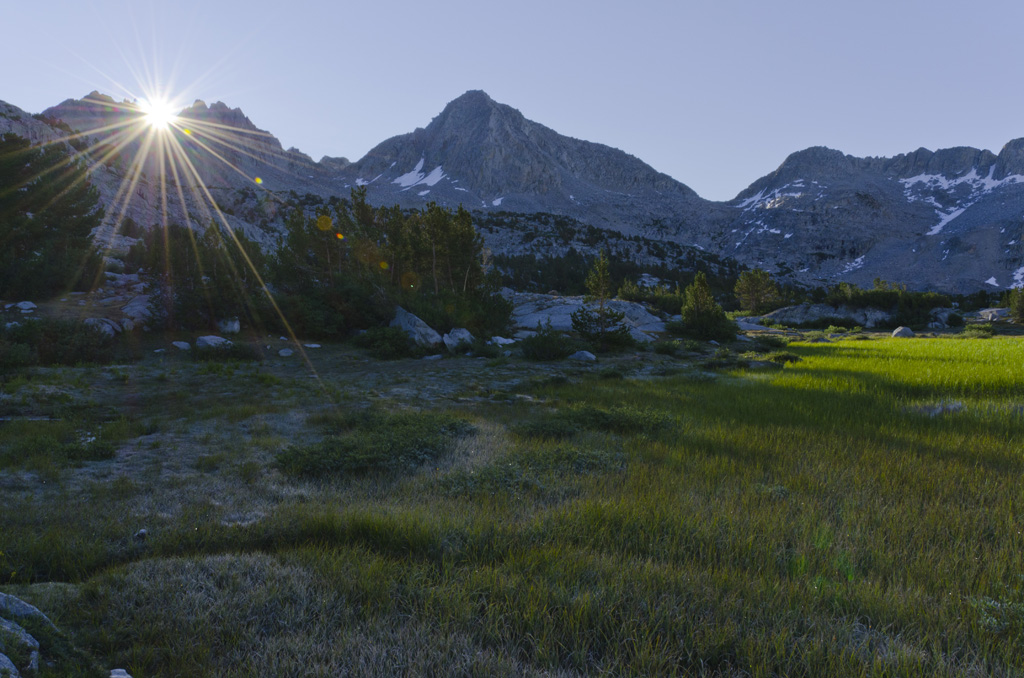
    I leap out of my sleeping bag, jump out of the tent, grab my wide-angle lens, and crank down the aperture. I race along the shores of Lake 11,400’, chasing the border where light meets shadow, trying to capture perfect sun stars. As I reach the southern shore, I snag a double star—one behind Mt. Tyndall, and the other mirrored in the lake below. The rising sun begins to burn off the morning dew, and wildflowers open up to embrace the warmth. I switch to my macro lens, capturing delicate details.

    Meanwhile, Brad is getting breakfast started. It’s the usual oatmeal, coffee, and scones, though later we’ll realize we forgot the honey. Since today is our easiest day, we linger over breakfast, soaking in the calm of the lake and the wide-open landscape before us.

    When we finally set out, we opt for a cross-country route heading east through the valley, which spares us the drop down onto the JMT. Being above the tree line, the route is straightforward. We make a direct line toward Mt. Tyndall. As we tiptoe across Tyndall Creek, I tell Brad that this really is a perfect place.

    We join the Shepherd Pass Trail directly across from Rockwell Pass and slowly wind our way up the gentle slopes. Compared to the grueling climb to Forester Pass, today’s hike feels almost leisurely. The elevation gain is mild, as we’re already on a high, treeless plateau, with a few small creeks braiding across the trail.

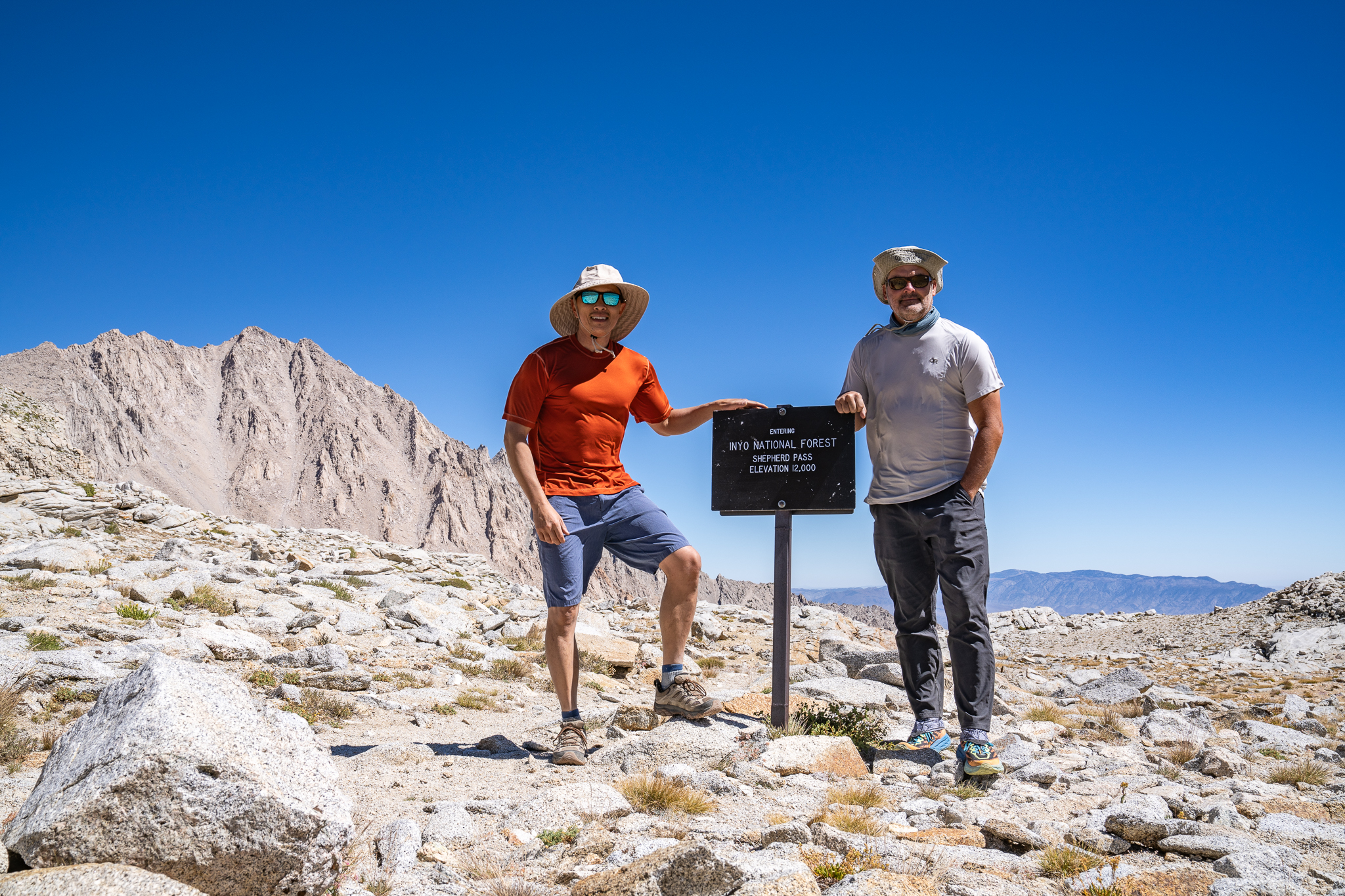
    But the wind is relentless. At the top of Shepherd Pass, it howls. I set up a low tripod to take our pictures, constantly worried that the wind might knock over the camera. The other side of the pass is a long scree slope, as dizzying as the south side of Forester Pass. With the wind whipping around us, I ask Brad to tuck away my hat so it doesn’t blow into my face during the scary descent.

    I brace against the fear of sliding down the steep incline, taking slow, deliberate steps. For a brief moment, I consider asking Brad to tell Yan, “I love you,” if something were to happen to me. Once we’re past the scariest part, I check my phone. There’s signal! I quickly send a few texts to Yan and even manage to call her. It’s so good to hear her voice.

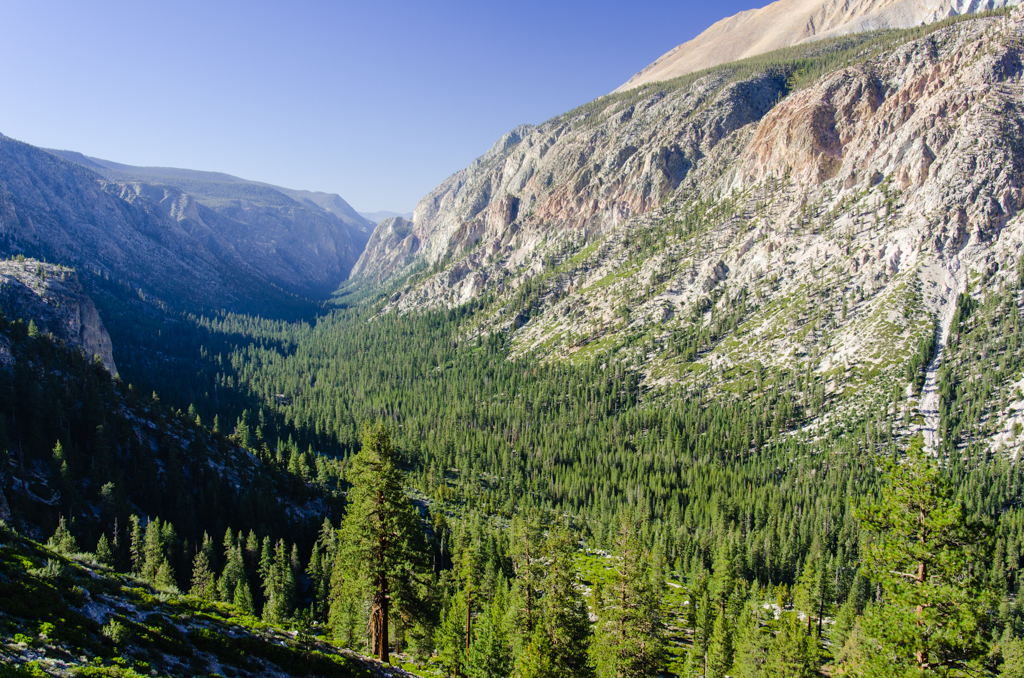
    We descend rapidly, leisurely almost, leaving the scree field behind and passing The Pothole. The barren moonscape transitions into a pine forest, and we can hear Shepherd Creek’s soothing song. Before long, we arrive at Anvil Camp.

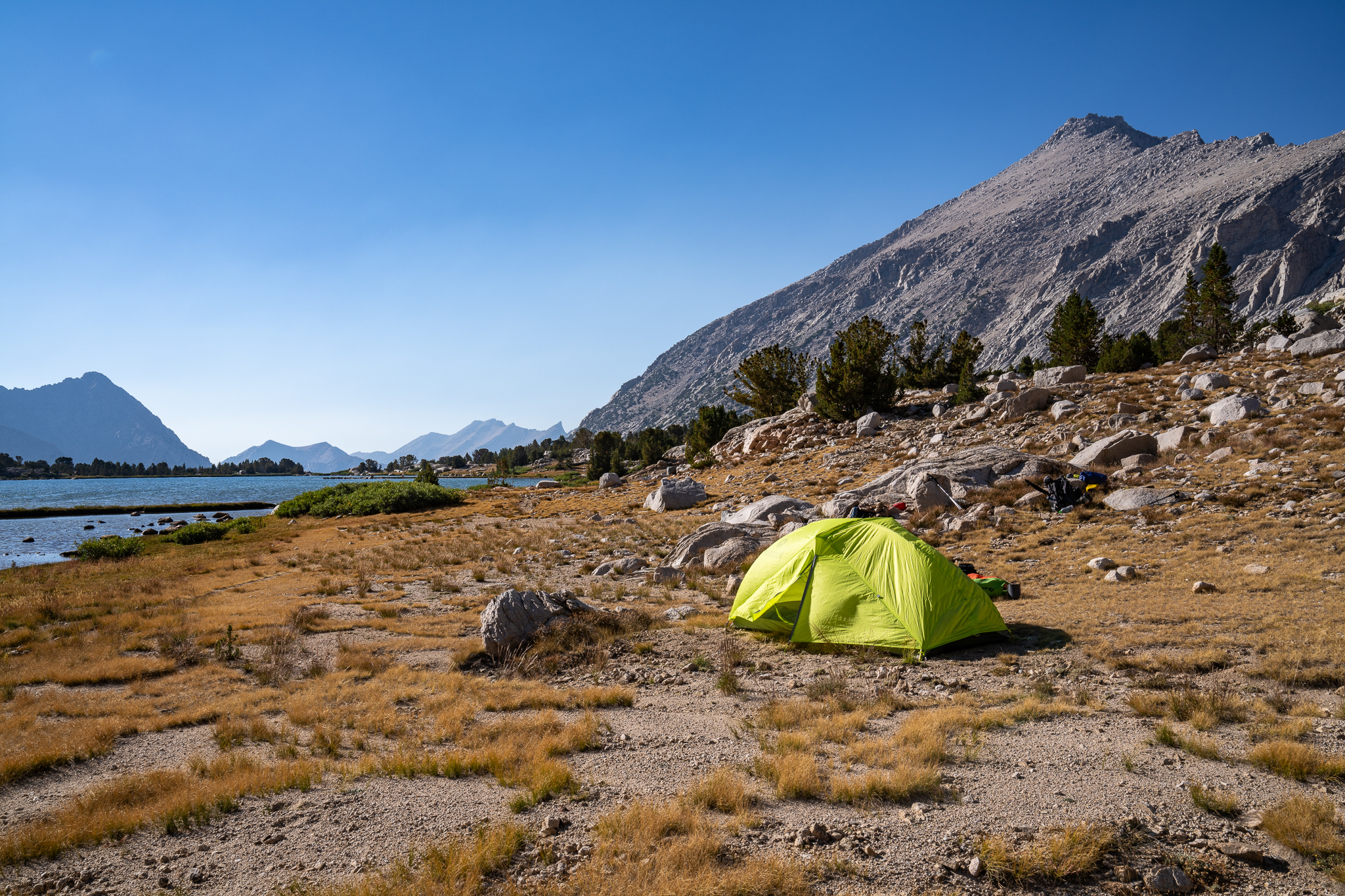
    It’s only 2:00 in the afternoon. We snack on leftover lunch and then scout for a better campsite. Across the right bank, nestled among foxtail pines and next to a small meadow, we find the perfect spot. Beyond the meadow, the dry slopes are dotted with boulders and more pines. I find a cozy place for a warm afternoon nap. In the meantime, Brad naps on the tent’s footprint.

    At 4:00, we start the afternoon routine. Set up camp, shampoo, and wash. Brad sees me shiver in the pool of snowmelt and decide against bathing. We make dinner. Tom Kha soup is ready in no time, and Brad shaves carrots for the Pad Thai. A squeeze of fresh lime gives the dish a bright, fresh kick.

    It’s our final night out. I get a flashback to our hike out on the last day in Rainier, when a light rain swept over us and brought on the feeling of accomplishment, of connectedness, of contentment, all wrapped into one. The blue and orange shirts I wore on that trip are still with me now. Fifteen years have passed since that trip, but the memories, though distant, feel vividly clear.

    After a camp-style apple pie, I drift off to sleep, lulled by the sound of Shepherd Creek rushing by, as scenes from backcountry trips of yesteryears play in my mind.


  • Forester Pass

    Forester Pass

    Kearsarge Pass | Center Basin | Forester Pass | Shepherd Pass | Shepherd Creek

    Part 3

    Breakfast is the same, yet somehow it gets better each morning—hearty oatmeal mixed with honey, pour-over coffee, and scones that hit the spot.

    Sunbeams dance on the stream like shards of glass, casting shades of amber, emerald, and turquoise. The inlet at Golden Bear Lake flows stronger today, a subtle shift from yesterday’s calm. We know today’s going to be tough, so we pack up, soaking in the last views of this stunning basin.

    Back on the JMT, the trail wastes no time—its relentless ascent toward Forester Pass begins almost immediately. Along the way, we spot a family of Sierra grouse nestled in the brush. The path bends eastward, then curves south, quickly lifting us above the trees into a world of eroded granite and spartan pools.

    At 11,654 feet, we hop across an idyllic stream. A large flat boulder by the water is a clear favorite among hikers—a perfect spot to pause. Straight ahead, the notch of the pass comes into view, and the cascading waters seem to sing, their melody drowning out our labored breaths in the thin air. Brad turns to me and says, “If I die before you, I’d like you to scatter my ashes here. Bring my kids with you. Anyone who cares can hike in to visit.” He’s not trying to be morbid, he adds, just that these mountains are so magnificent, so spectacular, and from here, the view is unbeatable.

    We shift to happier thoughts as we tackle the switchbacks up to the final lake before the pass. It’s our last chance to snack and fill up on water. The last few hundred feet are grueling, each step demanding a deliberate breath. But soon enough, we make it.

    Forester Pass! At 13,200 feet, it is the highest point along the Pacific Crest Trail and lives up to its reputation as being one of the most difficult passes along the JMT.

    I peer down the southern side, and the view is dizzying. The trail clings to the granite face, a misstep away from a long fall. Carefully, I place one foot after another, hugging the cliffside as we descend. At the bottom of the steep section, we find a picturesque lake, the perfect spot to break for snacks and refill our water.

    The next section is a speedy hike down gentle slopes along the west side of Diamond Mesa. We make quick progress, dropping into the Tyndall Creek drainage basin. Knowing our camp is near the trail to Lake South America, we veer off-trail at 11,400 feet, following the contour lines, dodging boulders and downed pine trees. Before long, our destination—a nameless lake at the same altitude—comes into view.

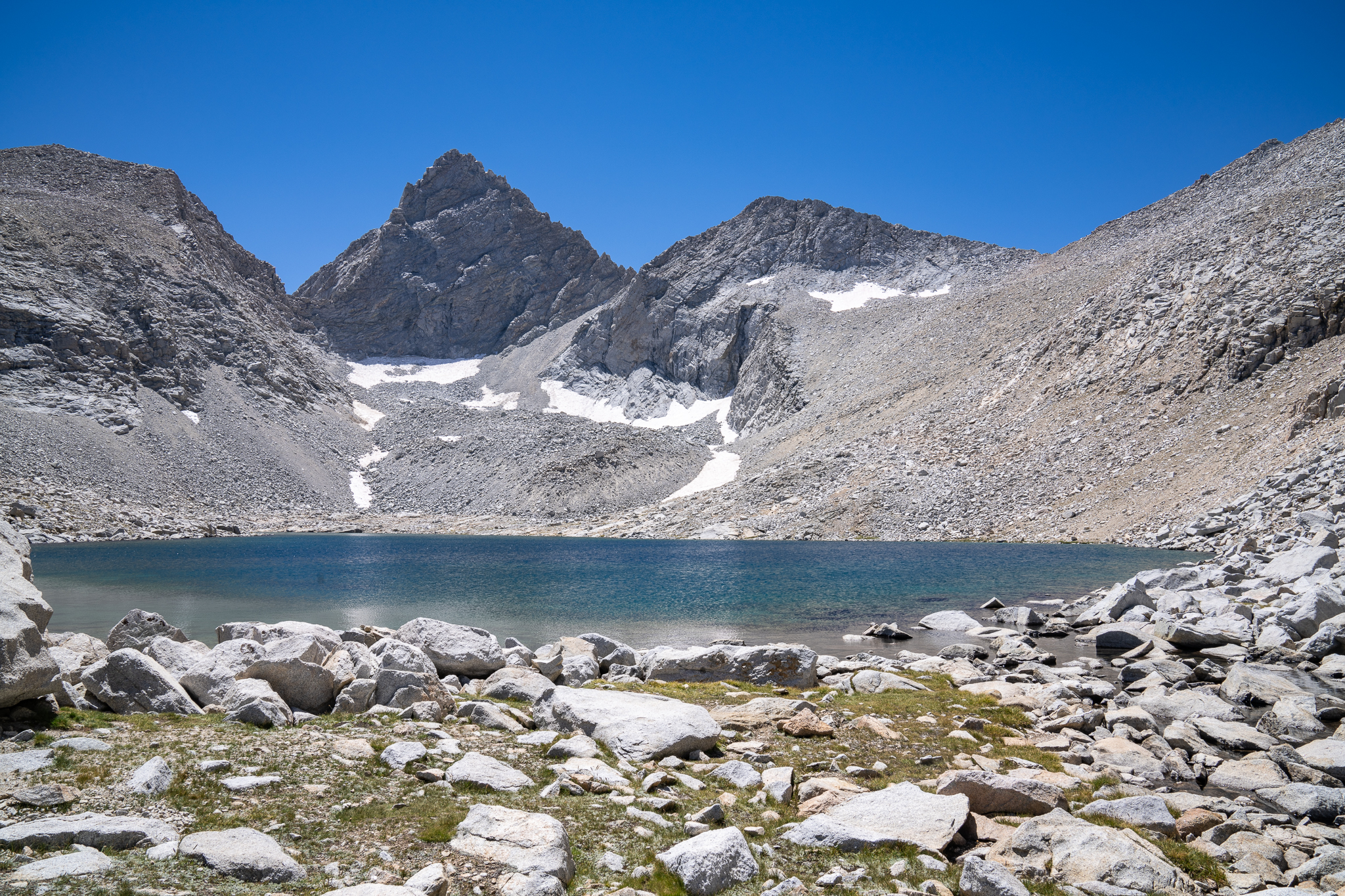
    This lake, which I’ll call Lake 11,400’, is like an infinity pool. The opposite shore forms a low rim, hiding the meadow below. Beyond the rim, Polychrome Peak, Mount Tyndall, Tawny Point, and the surrounding skyline rise dramatically.

    We are exhausted, having covered about twelve miles and crossed the notorious pass. The rest of lunch has lost its appeal, so we ditch it and focus on dinner. Tonight’s menu: egg drop soup and beef-flavored ramen with vegetables. The brownies for dessert didn’t survive the trip intact, but they’re still delicious, even eaten with a spork.

    As the near-full moon rises behind the eastern peaks, I capture a few shots during the evening’s blue hour. It doesn’t take long before sleep pulls me under.


  • Center Basin

    Center Basin

    Kearsarge Pass | Center Basin | Forester Pass | Shepherd Pass | Shepherd Creek

    Part 2

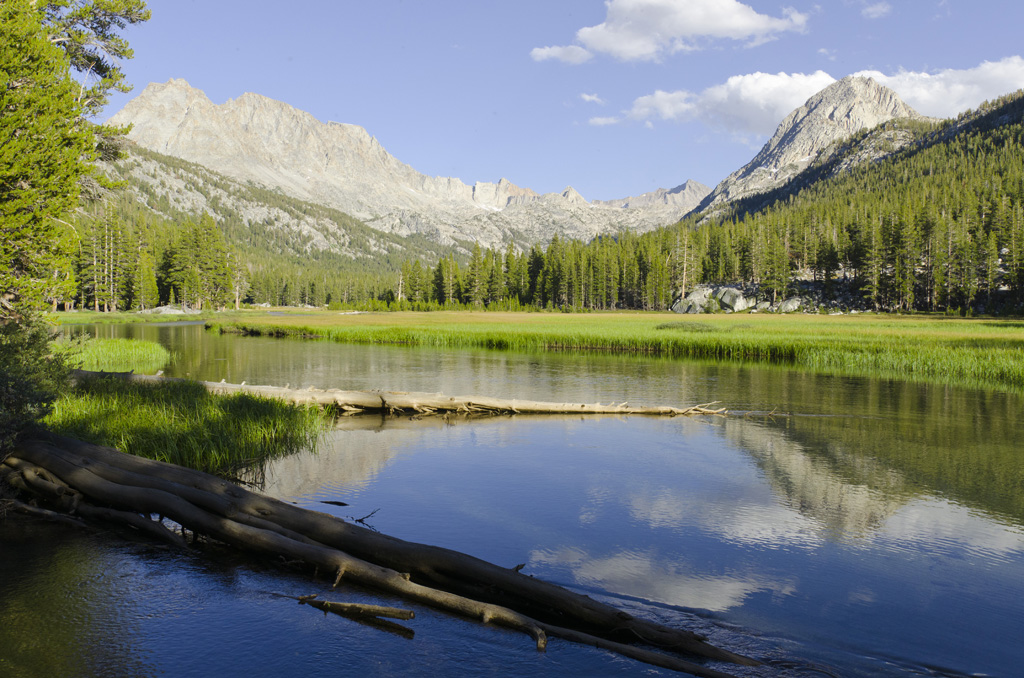
    The lake is still, like a mirror in the morning light. Around dawn, I poke around with my macro lens to find suitable subjects, looking for details that often go unnoticed. Then, we have a simple but satisfying breakfast: oatmeal with honey , scones with pour-over coffee. I had made the contraption to hold the filter paper, and grounds were pre-measured from home: 35 g of beans to 560 cc of water.

    We set out under another bright sky. The wind starts to pick up as we hike around Bullfrog Lake. After heading down the Vidette Switchbacks, we reach the John Muir Trail along Bubbs Creek. There are a few overused campsites, and we try fishing from one of them. The hope is to catch some and grill them here, before we ascend above 10,000 feet where fires are prohibited. The one and only ranger we encounter on the trip greets us here and checks my permit. After lunch, we hike on.

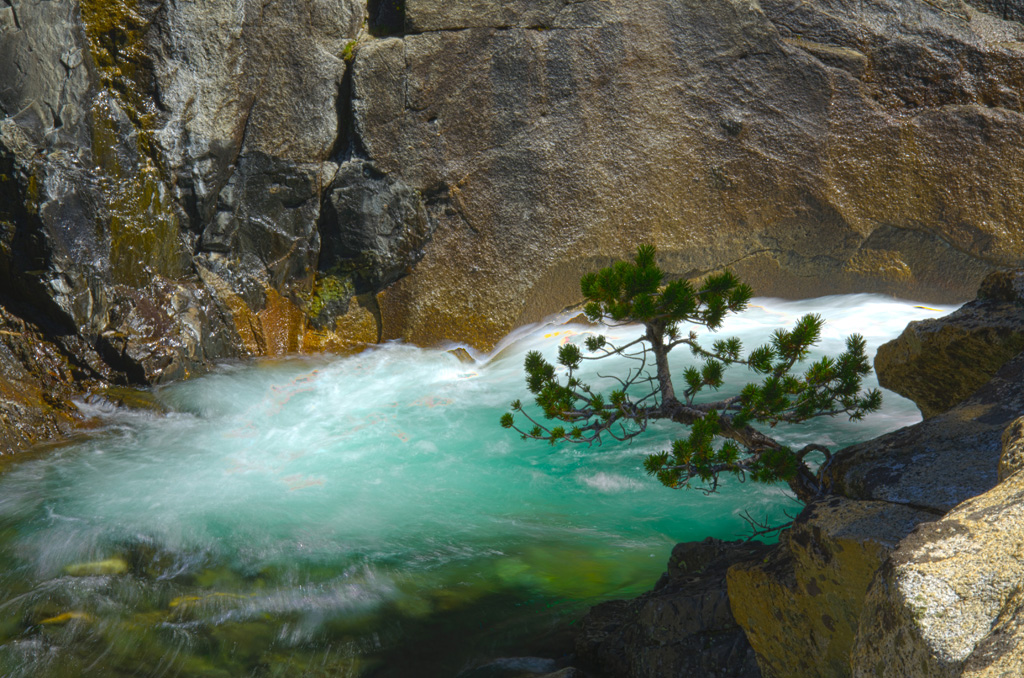
    Halfway between Vidette Meadow Junction and Center Basin Junction, we stumble upon an impressive waterfall. Pictures don’t capture its majesty, especially in the glare of the harsh noontime sun. To our delight, though, trout are dancing in the large pool below the waterfall. There are maybe two dozen fish darting around. Brad and I decide to cast, and in the fast-moving current, without the chance to examine the fly, the golden trout strike at the caddis again and again. This is Brad’s first forage into fly fishing, and he’s enjoying the game.

    The trail up to Center Basin is non-distinct, but luckily, we met a pair of hikers who described how to find it: directly across from the campsite with a large bear box. The climb is difficult in places, and being unmaintained, we lose the trail in a few places only to wander back onto it. Cresting the ridge, an expansive basin greets us, Center Peak standing sentinel to the right, and the Crags palisading on the left. A lush meadow and shallow lakes spread out before us like a hidden paradise.

    We push up into the next basin, reaching Golden Bear Lake. The solitude here is deafening, and I feel like the mountains and earth are all touching the sky. Brad and I scout out a nice campsite; I like it because it allows for open views of the sky for star photography. With map and compass, I orient myself, pinpointing where Polaris will make its appearance tonight —just over University Pass.

    Following our usual routine, we set up camp, wash off the trail dust, and do laundry. Our shirts, shorts, and towels fluttering against the towering peaks evoke images of Tibetan prayer flags. Tonight’s dinner menu features spinach and cheese tortellini with pine nuts, Parmesan, and olive oil, finished with fresh basil. Fresh herbs are light and add so much to a backcountry meal. For dessert, Brad whips up tiramisu for a sweet treat to end the day.

    As the sun is setting, alpenglow emerges and paints the peaks in rosy hues. I set up my wide-angle lens and frame the tent and where I figured the north star will be. After a few test shots, I turn in, setting my alarm for 21:17, when dark night begins.

    The stars emerge and turn the sky into a brilliant tapestry. The moon is so bright it makes my test shots look like daytime photographs. I set the intervalometer and tuck back in; after an hour, I take my camera into the tent and drift off to sleep.


  • High Sierra Trail: Day 6

    High Sierra Trail: Day 6

    Preparations  |  Day 1  |  Day 2  |  Day 3  |  Day 4  |  Day 5  |  Day 6  |  Day 7  |  Day 8

    Day 6

    Like the other mornings, the routine is pretty much the same—hot breakfast, clean up, pack, and head out.

    We quickly gain elevation on this climb out of the Upper Kern Canyon. Before long, we are looking back down the canyon that is open to the clear blue sky. Then, we join Wallace Creek and hike alongside it. Along the trail, Wayne and I share stories of the meaning of the Sabbath and of relationship. Mark hikes ahead and loses the group. Near the campsite where Mark originally wanted to stay, just before the flat section, we step around a huge pile of bear droppings, bright red from the meal of ripe berries.

    At the junction before the Wallace Creek ford, we catch up to Mark, finding him rested, shoes off, sitting on a low boulder. He had already eaten, treated water, and taken a nap. At least, that’s what he wants us to believe, maybe to bruise our egos. We have a quick snack and rehydrate here. This is the official end of the High Sierra Trail. Across the creek, we step onto the Pacific Crest Trail and the John Muir Trail, along a section where they intertwine as one.

    Mark and I set off along this section, hiking in an out of sporadic stands of pine trees. The trail brings us to pretty Sandy Meadow. Wide open, this meadow drains into Whitney Creek below, and beyond, on the other side of the Kern Canyon, broad Red Spur obscures much of the Great Western Divide. The Kaweah Peaks Ridge pokes from behind, though, vying for attention. Around the bend, Mark tells me that he likes going with people who know how to backpack; he now puts me in that category. I tell him I finally feel affirmed: “Nice to now be categorized as someone who knows how to backpack.” This is good.

    We find Wayne waiting for us at the next junction, the one leading to toward the Crabtree Ranger Station. Earlier, Mickey started a bet with Mark that he wouldn’t be able to hold out and not use the wag bag; if Mark succeeded, he’d get free ice cream. Mark feels the urge and takes off for Ranger Station, where there is supposed to be a toilet. Beyond that point, as instructed by Ranger Ben, we will be entering the Mt. Whitney zone where wag bag use will be enforced. I had told Mickey and Mike that we’d rendezvous at this junction, and after waiting for some time and now getting hungry, with Mark taking all the food with him, Wayne urges me to go on ahead.

    I take the spur trail at the junction to the Ranger Station. Next to the sign, there is a big plastic box full of wag bags along with instructions on how to use them. I already have two in my pack, as does Mark and everyone else. Across the creek near the Ranger Station, I find Mark snacking under the shade of a stunted pine tree. I join him briefly, but fearing that the others might not know that I had taken the spur, I hike back to the junction and arrange my trekking pole to signal the right turn.

    The others soon join us, and we visit the Ranger Station. Wayne is amazed at the workmanship and attention to detail that has gone into this cabin’s construction. He and Mickey enjoy the lounge chairs, sitting on the porch, watching the wind carry messages from the Tibetan prayer flags to some other realm. We decide that there is plenty of time to kick back around here. Several of us take naps under the spindly pine’s shadow.

    Mark and I, having been there the longest, grow restless and decide to leave first. Mickey isn’t with us, so I offer to go look for him. I find him waiting at the junction near the box of wag bags. I drop my pack and run back to tell Wayne and Mike that we’re ready to take off.

    The three of us take off ahead. Mickey tells Mark and me stories of former students who had poor patient interviewing skills. The story finishes about the same time we reach Timberline Lake. Along its beautiful northern shore, we take a few pictures. Ryan and I did the same thing years ago. Then, we reach Guitar Lake. It’s still early in the afternoon, and having found some good campsites amongst the tent city, I decide to set up. Mickey wonders if we should go on to the lake above so that tomorrow’s trip will be more bearable, but I was mentally done with hiking today.

    While setting up, Wayne and Mike join us. “So we’ve decided to camp here?” Wayne asks Mickey. I tell myself that Wayne is probably thinking, again, that I am somehow getting the group to do what I want. Anyways, everyone seems to agree that this is a good place. There are nice open spots on the top of a bluff overlooking the clear lake, near the lake itself, and also not too far from the inlet creek. I scout out the scenes and orient out the North Star with compass in hopes of getting good star trails. I know the moon will be out and very bright tonight, and with the clear skies, there is a good chance that I can get some interesting shots with the camera and tripod. The ground is hard, so instead of pounding stakes for the tent vestibules, I loop one of the stakes and find a rock to anchor it. Lifting up the rock reveals used toilet paper; at least it’s not fresh, having been scorched by the sun and partly disintegrated by the intense ultraviolet light. I haven’t used the wag bag yet, but I feel pretty certain that this is within the Whitney poop-free zone. Disgusted at the sight, I shift the tent a little bit and find another anchor.

    We clean up. Mickey finds himself a nice spot to bask under the warm afternoon sun. Mark cannonballs into the lake and sustains a small cut. Because this is a lake, I tiptoe in and carefully skim the top layer of water, trying not to stir up nasty sediment during my shower; I manage to stay pretty clean.

    Dinner tonight is Tom Kha soup with Pad Thai, and I’ve been looking forward to this meal since I packed it. For the soup, I have a packet of chili paste I made several weeks ago by slow roasting key ingredients in palm sugar and oil. In the wilderness, with so many meals of dried food, the crunchy julienned carrots and lime wedges will brighten the main dish with a spark of freshness. We first have soup, then noodles topped with crushed peanuts, then soup again. On this cold evening, this is perfect.

    Guitar Lake sits on a high bench, with the head and neck of the guitar facing west. On the opposite end, Mt. Whitney stares down at the instrument’s body. We camp right in the indentation, where the guitar would rest one someone’s thigh. The sun is setting, and I tell Mark I’m going to hike up the trail to the slopes flanking the base of the guitar and enjoy the sunset and its afterglow. He is disinterested. I should have gone up earlier, because now, the sun has already dipped behind the Great Western Divide. I helped with the dishes but without the pink bucket, and we made one too many trip to the stream; this delay cost me the sunset view. All that is left is the orange band of alpenglow, and the hike is definitely worth it.

    It’s time for some evening shots. After all, I’ve been getting good use out of my camera and tripod. Mike’s green tent is lit in front of the craggy slopes. After astronomical twilight—again I wonder if Mark knows what that is—I set up at the pre-scouted spot, compose my shot around the tent, Polaris, and Mt. Hale, dial in the settings, and open the shutter. I plan for an 85-minute exposure equivalent. There is really only one chance to do this, as I wasn’t planning to get up in the middle of this freezing night. Besides, we all need the rest for tomorrow’s big day.

  • South Lake to North Lake: Day 4

    South Lake to North Lake: Day 4

    September 3

    We both slept very well. The night felt warmer, and we had very little tent condensation. Brad checks his thermometer, which reads 30 degrees Fahrenheit. It feels warmer. Anyways, I go on a private walk back along the creek, taking pictures along the way. I find an interesting tree whose bark had split to reveal bright yellow streaks. The morning sun turns the forest on the opposite riverbank bright gold.

    I return to find breakfast ready. We have coffee and then oatmeal while sitting on a boulder. My feet dangle without touching the river. It’s a very peaceful morning, soon to be interrupted by mosquitoes. We do a quick cleanup, slather on DEET, and head down the trail.

    Past Evolution Meadow, we come across a wide stream crossing. Shoes and socks come off, and we wade across Evolution Creek. The drying and redonning takes longer than the crossing. The descent along the creek brings us close to so many emerald pools and roaring cascades. After passing Aspen Meadow and following the creek through an exposed section, we reenter a brief forested area. At the bottom, we cross the footbridge and end up back in the John Muir Wilderness, having exited Kings Canyon National Park.

    The next uphill stretch turns out to be quite strenuous. The first part is nearly straight up. Brad and I wonder how stock would ever be able to do this trail. We stay high above the river gorge. The trail then winds through a large slope of manzanita bushes before reentering forest cover. We had originally planned to camp at the park boundary trail junction, but being too early in the day, we figured we should push forward. Now, I ask everyone we pass about campsites ahead, and we get some useful suggestions. Past the manzanita, the trail dips a little to meet the river. There is a campsite tucked in a stand of mixed conifers and aspens. The river roars just a few boulders away, and we decide that this is perfect.

    Like last night’s site, this is one of the most beautiful places. A little upstream, the river makes a series of stair step cascades, creating braids of trickles and bathtub-size pools. The afternoon sun bathes this east-west canyon. We clean up here and do laundry, taking our time on the warm slabs of granite.

    Dinner starts off with miso soup decorated with tofu and seaweed. The main course is hot and spicy Japanese curry with vegetable protein and a fresh onion from my garden. We have this over rice, and again, Brad and I agree that Asian dinners seem to work better. Cleanup is easy, and after that, I take a solo stroll up the river. There are wildflowers among the boulders. The creek is beautiful in this late afternoon light. Soon, the setting sun briefly gives the clouds a brief orange glow.

    I return to a warm glow at the campsite. Brad had started the fire. We have hot chocolate while staring at the flames and listening to the flow of the river. The blaze feels warm. Brad tells stories from a book he recently read, about a Navy SEAL lone survivor in Afganistan. This is better than ghost stories in the dark forest in the middle of nowhere around a dying campfire.

  • South Lake to North Lake: Day 3

    South Lake to North Lake: Day 3

    September 2

    This day would be the longest. I wake up to a beautiful morning. The air is crisp, the mosquitoes are gone, and my tent held up to the wind. I had guyed out Brad’s side of the tent to give more lateral headroom to the A-frame profile, and he says that it’s better. Hot coffee, although the instant variety, is surprisingly good on this cold morning at nearly 11,000 feet. Hot oatmeal is good too.

    Morning routine after breakfast takes me scouting out a spot with toilet paper in hand. I walk south to an area behind some trees and pick out level ground. From this vantage point, I can see the entire valley. Suddenly, I see trail, and I realize that it is the trail that we traversed the previous day. I have a clear view, and I am sure that anyone coming up the trail would have a clear view as well. Thankfully, it is too early.

    There isn’t much condensation on the tent, so packing up is easy. We follow the trail and end up scrambling up a large boulder pile before realizing that the trail had actually crossed the creek. We backtrack, and soon, we head up the trail toward Muir Pass. A high alpine meadow rests on the plateau overlooking Lake 10880. Then, we climb above treeline. Helen Lake is a beautiful, deep blue body of water rimmed with bright snow. We have a little snack here.

    The last little push to the pass takes place over mostly snowfields with well-established tracks. Muir Hut comes into view. From here, the desolate northern expanse looks like moonscape dotted with blue gems, deep lakes made up of snowmelt. We spend a lot of time checking out the Hut, taking pictures, and having lunch. After we finish, several groups of hikers arrive from north and south. It becomes a crowd, and we figure that it must be time to leave.

    We pass by large Wanda Lake, then Sapphire Lake, and finally stop at Evolution Lake inlet for another lunch break. The noontime sun beats pretty hard in this high environment, and we almost overheat. Brad washes his face and bandana, and I dunk my head in the cool stream. We also refill our water containers for the trip down from here.

    Evolution Lake twists, turns, and tucks among boulders, rock piles, and peninsulas. It takes us a long time to reach its outlet. From here, we start our descent to Evolution Valley. We rest on a large slab of granite with an open view of the valley. Brad takes a nap in a gently-contoured spot with a rock pillow. Staring down from here, it’s like flying, lifting off from the mountainside.

    The trail flattens out at Colby Meadow, and we soon arrive at a large campsite in McClure Meadow. It’s a nice site, but we figure that we can find better. We walk further down the trail, pass a site that is closed to restoration, and come across another place. There is already an orange MSR tent pitched there, so we walk around and beyond it to a large flat spot. A large clean granite slab forms a low ridge between the site and the river. This proves to be a perfect spot. A few steps away from our campsite, one gets the best view of McClure Meadow and the rugged ridgeline of the Sierras in the background. I am happy we ended up here. Brad is happy that we finally found a spot and can now settle.

    Tonight’s dinner is Tom Yum Soup and Thai Peanut Noodle. The fresh lime makes such a difference. We both agree that Asian meals tend to work better. While we have dinner, the mosquitoes have theirs. Brad puts on his bug protection, complete with a netting hood. I’m nearly immune. Because we are now lower than 10,000 feet, we are allowed to have a fire. Brad builds a small one right on the granite slab. The ambiance is nice. We have dark chocolate cheesecake for dessert along with hot chocolate spiked with cayenne pepper. My camera takes star trail pictures while we sit and talk around the fire.

     
  • South Lake to North Lake: Day 2

    South Lake to North Lake: Day 2

    September 1

    A dusting of frost covers nearly everything. I first notice this on the backpacks just outside the tent. My towel is frozen stiff. There is bad condensation inside the tent because it’s so cold outside. The cure, of course, is a nice helping of hot coffee. Starbucks Via. Being in charge of the rest of breakfast, Brad measures out servings of oatmeal and dried mix of almonds, coconut, and an assortment of berries. Yes, the caloric allowance has been accounted for.

    After loading up the packs, we head down into LeConte Canyon. The Black Range forms a wall directly in front of us across the canyon. Dusy Branch cascades alongside our descent, and the large waterfall right after the footbridge presents us with many photo opportunities.

    Soon, we reach the junction with the John Muir Trail. We register ourselves. We hike through scenic Little Pete Meadow and then through the forest cover at the edge of Big Pete Meadow. Switchbacks take us up toward Muir Pass. We meet hikers coming from the other direction, and I ask some of them about conditions. Helen Lake is too frozen to stay at, and I know that there are campsites at an unnamed lake just below that.

    We arrive at Lake 10880. While there is a very nice peninsula at the lake’s outlet with great campsites, the biologists have deemed this area to be a frog protection zone. We find our site on a high ridge overlooking the outlet stream. Behind a big rock pile, a small trail leads to the edge of a bluff facing the canyon.

    This night’s dinner would turn out to be the worst of them all. The black bean soup is tasty, but I will soon conclude that watery soups are much better in the wilderness. The post-dinner routine is pretty much the same—cleaning, hot drinks, dessert, putting away food.

    Brad and I decide to take a stroll along the lake. We sit at the peninsula’s edge watching the sky turn from blue to purple to black. Brad plays music from his iPhone, something you normally try to get away from while seeking wilderness. I tell myself that technology is OK; after all, I did bring a heavy digital camera.

    Setting up the camera, I find a very nice spot just south of our tent, between camp and the high bluff overlooking the approach trail. From here, the view of the tent and the granite ridgeline across the lake are clear. The Big Dipper, with the ladle handle pointing westward, and Polaris come into plain view. I take a few test shots while asking Brad to flit the headlamp around inside the tent to bring even illumination. After getting everything set, I turn on the intervalometer and let my camera click away on multiple 30-second exposures. The plan is for a total of one hour—pictures to stack together as star trails.

    The wind whips around our tent, and this wakes me up. Not being able to sleep, and thinking that the camera is finished, I venture outside to check. It has only been about 45 minutes, but now, I’ve ruined that exposure because of my headlamp light. I figured it would be fine to stop it here, and I bring the camera inside the tent.