Tag: Center Basin

  • Forester Pass

    Forester Pass

    Kearsarge Pass | Center Basin | Forester Pass | Shepherd Pass | Shepherd Creek

    Part 3

    Breakfast is the same, yet somehow it gets better each morning—hearty oatmeal mixed with honey, pour-over coffee, and scones that hit the spot.

    Sunbeams dance on the stream like shards of glass, casting shades of amber, emerald, and turquoise. The inlet at Golden Bear Lake flows stronger today, a subtle shift from yesterday’s calm. We know today’s going to be tough, so we pack up, soaking in the last views of this stunning basin.

    Back on the JMT, the trail wastes no time—its relentless ascent toward Forester Pass begins almost immediately. Along the way, we spot a family of Sierra grouse nestled in the brush. The path bends eastward, then curves south, quickly lifting us above the trees into a world of eroded granite and spartan pools.

    At 11,654 feet, we hop across an idyllic stream. A large flat boulder by the water is a clear favorite among hikers—a perfect spot to pause. Straight ahead, the notch of the pass comes into view, and the cascading waters seem to sing, their melody drowning out our labored breaths in the thin air. Brad turns to me and says, “If I die before you, I’d like you to scatter my ashes here. Bring my kids with you. Anyone who cares can hike in to visit.” He’s not trying to be morbid, he adds, just that these mountains are so magnificent, so spectacular, and from here, the view is unbeatable.

    We shift to happier thoughts as we tackle the switchbacks up to the final lake before the pass. It’s our last chance to snack and fill up on water. The last few hundred feet are grueling, each step demanding a deliberate breath. But soon enough, we make it.

    Forester Pass! At 13,200 feet, it is the highest point along the Pacific Crest Trail and lives up to its reputation as being one of the most difficult passes along the JMT.

    I peer down the southern side, and the view is dizzying. The trail clings to the granite face, a misstep away from a long fall. Carefully, I place one foot after another, hugging the cliffside as we descend. At the bottom of the steep section, we find a picturesque lake, the perfect spot to break for snacks and refill our water.

    The next section is a speedy hike down gentle slopes along the west side of Diamond Mesa. We make quick progress, dropping into the Tyndall Creek drainage basin. Knowing our camp is near the trail to Lake South America, we veer off-trail at 11,400 feet, following the contour lines, dodging boulders and downed pine trees. Before long, our destination—a nameless lake at the same altitude—comes into view.

    This lake, which I’ll call Lake 11,400’, is like an infinity pool. The opposite shore forms a low rim, hiding the meadow below. Beyond the rim, Polychrome Peak, Mount Tyndall, Tawny Point, and the surrounding skyline rise dramatically.

    We are exhausted, having covered about twelve miles and crossed the notorious pass. The rest of lunch has lost its appeal, so we ditch it and focus on dinner. Tonight’s menu: egg drop soup and beef-flavored ramen with vegetables. The brownies for dessert didn’t survive the trip intact, but they’re still delicious, even eaten with a spork.

    As the near-full moon rises behind the eastern peaks, I capture a few shots during the evening’s blue hour. It doesn’t take long before sleep pulls me under.


  • Center Basin

    Center Basin

    Kearsarge Pass | Center Basin | Forester Pass | Shepherd Pass | Shepherd Creek

    Part 2

    The lake is still, like a mirror in the morning light. Around dawn, I poke around with my macro lens to find suitable subjects, looking for details that often go unnoticed. Then, we have a simple but satisfying breakfast: oatmeal with honey , scones with pour-over coffee. I had made the contraption to hold the filter paper, and grounds were pre-measured from home: 35 g of beans to 560 cc of water.

    We set out under another bright sky. The wind starts to pick up as we hike around Bullfrog Lake. After heading down the Vidette Switchbacks, we reach the John Muir Trail along Bubbs Creek. There are a few overused campsites, and we try fishing from one of them. The hope is to catch some and grill them here, before we ascend above 10,000 feet where fires are prohibited. The one and only ranger we encounter on the trip greets us here and checks my permit. After lunch, we hike on.

    Halfway between Vidette Meadow Junction and Center Basin Junction, we stumble upon an impressive waterfall. Pictures don’t capture its majesty, especially in the glare of the harsh noontime sun. To our delight, though, trout are dancing in the large pool below the waterfall. There are maybe two dozen fish darting around. Brad and I decide to cast, and in the fast-moving current, without the chance to examine the fly, the golden trout strike at the caddis again and again. This is Brad’s first forage into fly fishing, and he’s enjoying the game.

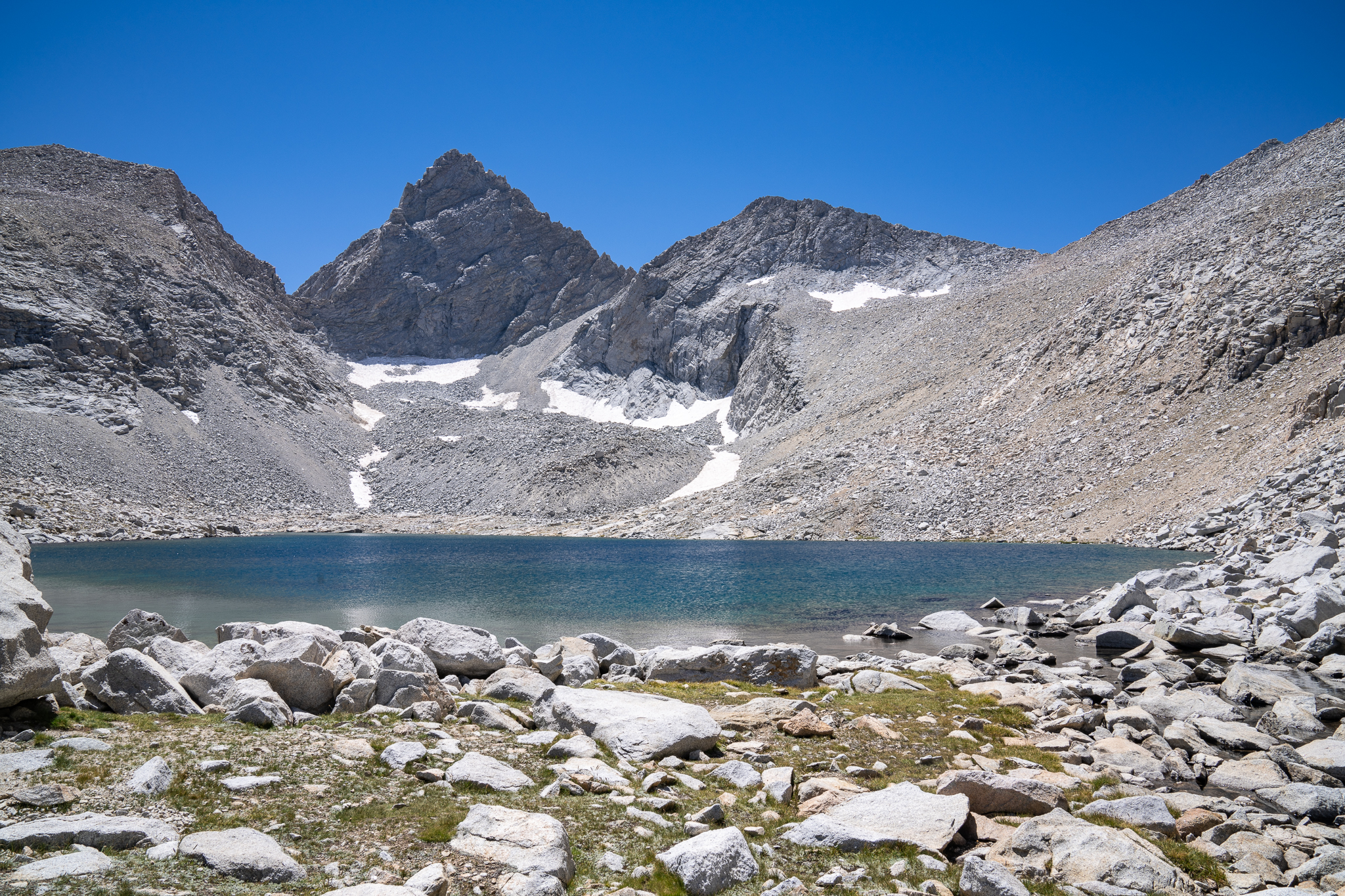
    The trail up to Center Basin is non-distinct, but luckily, we met a pair of hikers who described how to find it: directly across from the campsite with a large bear box. The climb is difficult in places, and being unmaintained, we lose the trail in a few places only to wander back onto it. Cresting the ridge, an expansive basin greets us, Center Peak standing sentinel to the right, and the Crags palisading on the left. A lush meadow and shallow lakes spread out before us like a hidden paradise.

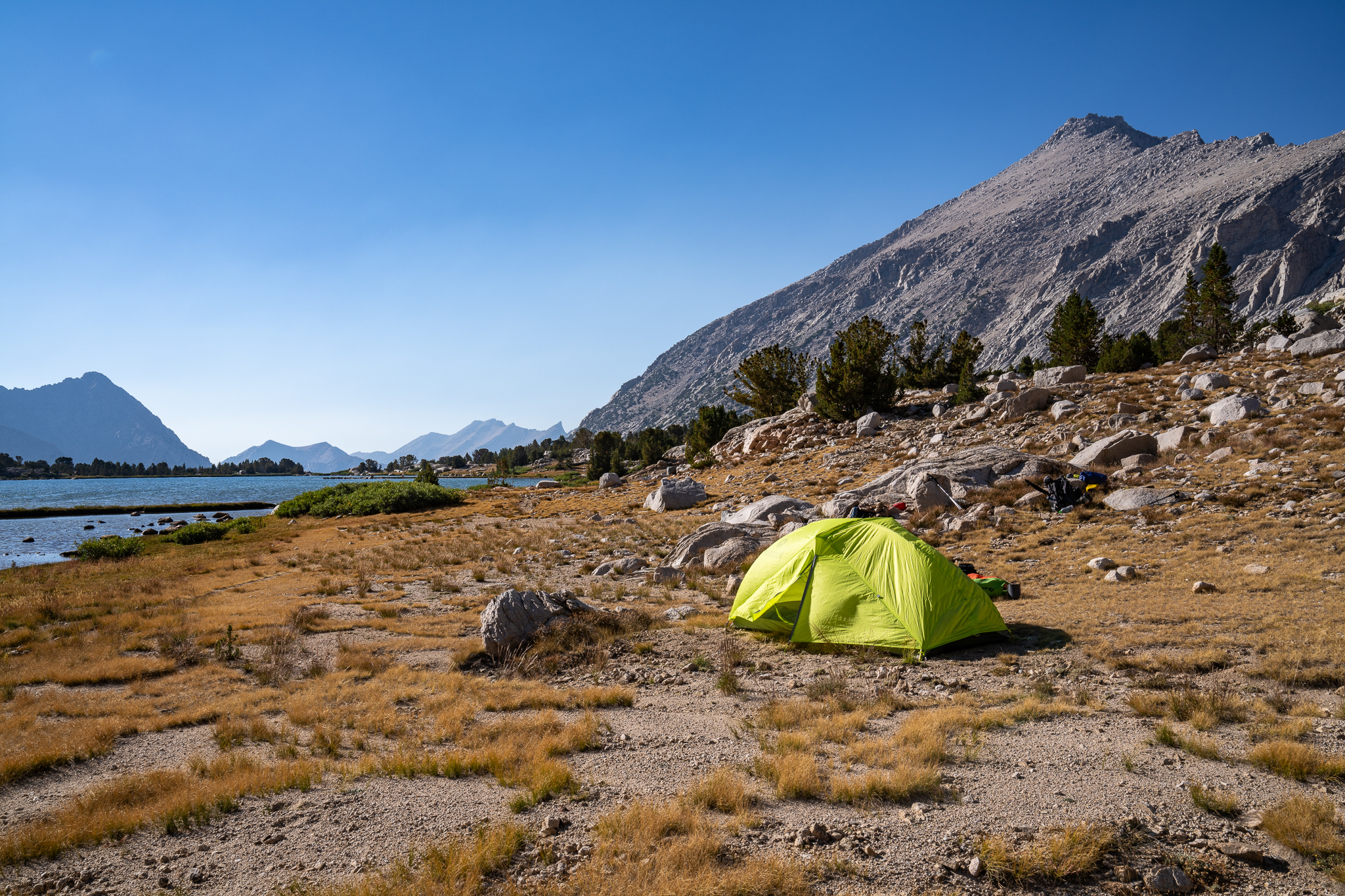
    We push up into the next basin, reaching Golden Bear Lake. The solitude here is deafening, and I feel like the mountains and earth are all touching the sky. Brad and I scout out a nice campsite; I like it because it allows for open views of the sky for star photography. With map and compass, I orient myself, pinpointing where Polaris will make its appearance tonight —just over University Pass.

    Following our usual routine, we set up camp, wash off the trail dust, and do laundry. Our shirts, shorts, and towels fluttering against the towering peaks evoke images of Tibetan prayer flags. Tonight’s dinner menu features spinach and cheese tortellini with pine nuts, Parmesan, and olive oil, finished with fresh basil. Fresh herbs are light and add so much to a backcountry meal. For dessert, Brad whips up tiramisu for a sweet treat to end the day.

    As the sun is setting, alpenglow emerges and paints the peaks in rosy hues. I set up my wide-angle lens and frame the tent and where I figured the north star will be. After a few test shots, I turn in, setting my alarm for 21:17, when dark night begins.

    The stars emerge and turn the sky into a brilliant tapestry. The moon is so bright it makes my test shots look like daytime photographs. I set the intervalometer and tuck back in; after an hour, I take my camera into the tent and drift off to sleep.