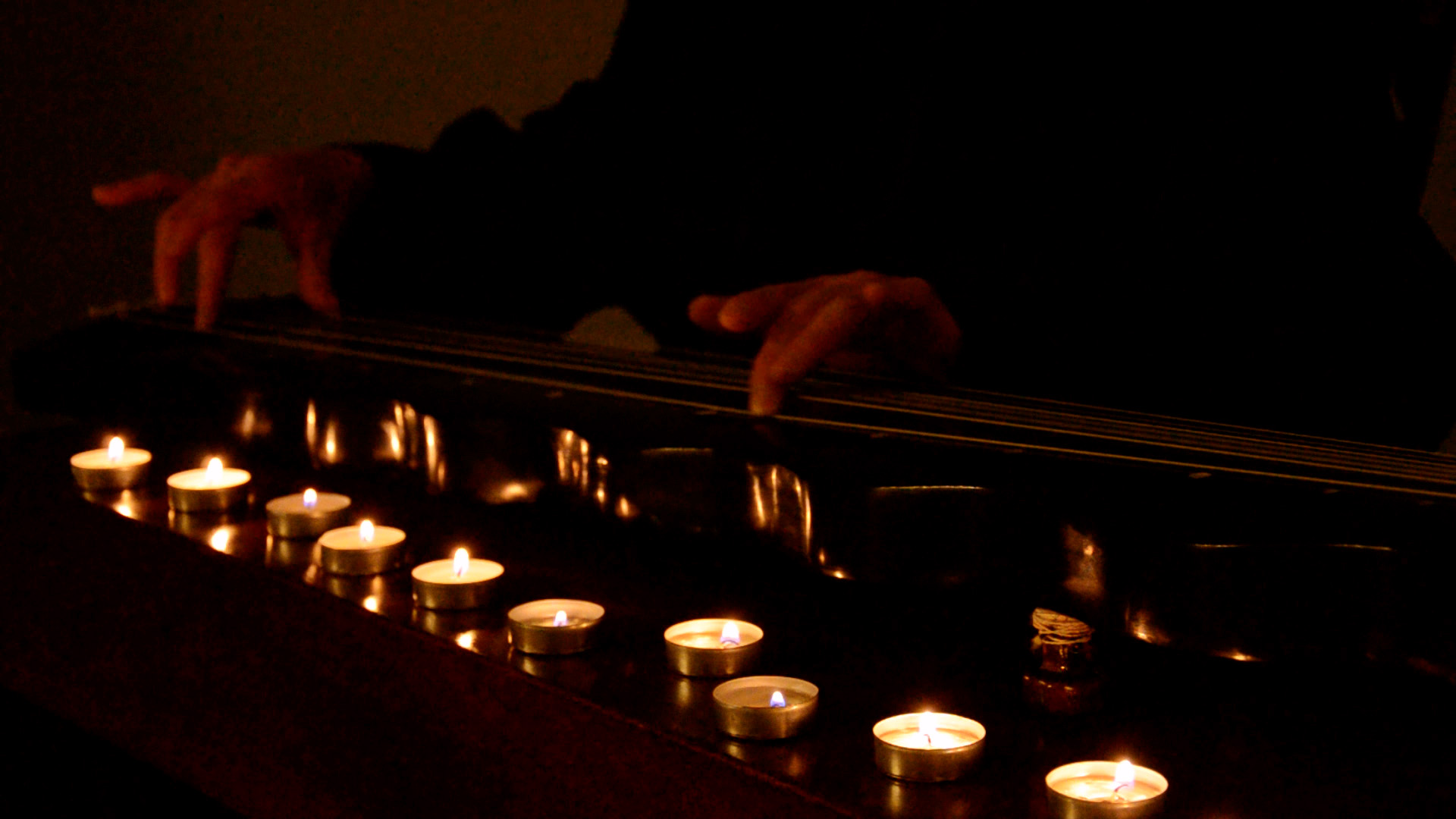
Tag: 梅庵琴譜

  • Lament at Changmen Palace

    Lament at Changmen Palace

    This version of Lament at Changmen Palace 長門怨 is from the Mei’an Guqin Manual 梅庵琴譜 of 1931, but the melody is from centuries earlier. The accompanying story, however, dates from the Han Dynasty.

    When Liu Che 劉徹 ascended the throne in 141 BC and became Emperor Wu of Han 漢武帝, his cousin wife Chen Jiao 陳嬌 became Empress. Not bearing him a son after many years, she lost affection. Empress Chen Jiao employed a shaman Chu Fu 楚服 and delved into witchcraft in the attempt to restore her status and to cast spells on the other concubines. Once this was discovered, the Emperor ordered the Imperial Counsellor Zhang Tang 張湯 to investigate. The search implicated 300 people, and the shaman Chu Fu was publicly beheaded. In 130 BC, on the 9th day of the 7th month, the Emperor deposed Empress Chen Jiao to the status of commoner and confined her to house arrest at Changmen Palace 長門宮. There, she hired the renown poet Sima Xiangru 司馬相如 to compose a song—The Ode of Changmen 長門賦—to regain the Emperor’s sympathy.

  • Summoning the Wind and Thunder

    Summoning the Wind and Thunder

    Like my most recent pieces, this composition, Summoning the Wind and Thunder 風雷引, is from the collection of the Mei’an guqin handbook 梅庵琴譜 and uses the lowered third string tuning. As with most pieces of the Mei’an tradition of briskly paced rhythm, this song employs unison and octave chords to reinforce fundamental frequencies.

    In the Mei’an handbook, the preface describes this piece as depicting a summer thunderstorm.

    As a literary reference, the 42nd Hexagram 第四十二卦 of the Book of Changes 易經 is named Increase 益, which has components of wind and thunder (䷩).

    象曰:風雷,益﹔君子以見善則遷,有過則改。
    The shape refers to Wind and Thunder, meaning to Increase; the superior man follows goodness when he sees it and corrects when he finds fault.

    By seeing how wind and thunder strengthen each other, one can find ways for self-improvement. Imitate goodness and correct fault. In this way, increase one’s integrity.

  • Autumn Evening Moorings

    Autumn Evening Moorings

    Also in the Shang tuning mode 商調 and from the Mei’an handbook 梅庵琴譜, this piece, Autumn Evening Moorings 秋江夜泊,  is a tonal painting depicting Su Dongpo’s 蘇東坡 (1037–1101) poem of the Red Cliffs 前赤壁賦. The site was where he thought the famous battle took place in the winter of AD 208–209.

    It was autumn of the year 1082, on the sixteenth day of the seventh month, when Su Dongpo took an excursion by boat with some guests. Under the full moon, while rocking in the gentle breeze and riding the fine ripples, the company drank and composed poetry. After a night of literary revelry, the small boat party ended with the dawning eastern sky.